
Mark Wen
Mark Wen — Founder & Content Editor
Mark Wen edits educational content about adult sexuality, consent, and intimate communication at Intimate Health Guide. Their work focuses on explaining common questions in clear, accessible language, using cited research and established educational resources. Mark Wen is not a medical professional and does not provide individual medical advice.

Edge of Bed Sex Positions: Height Setup, Butterfly, T-Bone and More
Edge of bed sex positions put one partner on the mattress and the other on the floor. The partner on the bed lies back or sits right at the edge, while the other stands or kneels in front of it. That small move changes three things at once: how your hips line up, who has leverage, and who carries the weight.
Read More
Waterfall Sex Position: Two Versions, Head-Down Risks and Gentler Options
The waterfall sex position is an edge-of-the-bed move in which one partner lies on their back with the head and upper body hanging off the mattress. In the version most position guides describe, the other partner straddles them on top.
Read More
Missionary Position: Variations, Angles and Comfort
The missionary position is any face-to-face position where one partner lies on their back and the other lies on top. Most of the surveys cited below rank it as the position people use most often. In a 2020 online survey of 21,038 Czech adults, face to face with the man above came first. That sample was not representative, so the ranking is a guide rather than a population figure.
Read More
Cowgirl Position: Woman on Top, Straddling and Squatting Variants
The cowgirl position is a woman-on-top sex position. One partner lies on their back with legs straight, and the other kneels astride their hips, facing them. Some educators also include a squatting version, with the rider’s feet planted instead of their knees. Because the setup works for any pairing, health writers also call it rider, cowboy or cowperson.
Read More
Reverse Cowgirl: What It Is, Angles, Comfort and Penile Safety
Reverse cowgirl is a partner-on-top position. One partner lies on their back, and the other sits astride them facing their feet instead of their face. The person on top sets most of the pace and does most of the moving. That tends to suit someone who likes control and feels at ease without steady eye contact.
Read More
What Is the Jackhammer Position? Pace, Setup and Safety
The jackhammer position is slang, and people use the name for two different things. Most often it describes a pace: fast, pounding thrusting with little change in speed, depth or intensity, which MEL Magazine notes is also called jackrabbit sex. Position guides use it for something more specific. WebMD treats the jackhammer as another name for the piledriver, an advanced pose where the receiving partner lies back with hips and legs raised high.
Read More
Full Nelson Sex Position: What It Is and Why It Strains the Neck
The full nelson sex position is a folded, held position named after a wrestling hold. One partner reclines on the other with their legs drawn up toward their chest. The partner underneath holds those legs back, and in the classic version locks their hands behind the folded partner’s neck.
Read More
Doggy Style Position: Setup, Variations and How to Stay Comfortable
The doggy style position is a rear entry position. The receiving partner is on hands and knees, and the other partner kneels or stands behind them. It is simple to start, and it changes easily. A pillow, the edge of the bed or a lower chest can turn it into a different position with a different effort level and depth.
Read More
Amazon Sex Position: Setup, Comparisons, Risks and Easier Options
The amazon sex position is a partner-on-top position with the usual roles turned around. The penetrating partner lies on their back and draws their knees toward the chest, while the other partner kneels or squats on top, facing them. From there, the partner on top sets the pace.
Read More
Prone Bone Position, Speed Bump and Dragon: Low-Effort Lying-Down Sex Positions
The prone bone position, the speed bump and the dragon all start the same way. The receiving partner lies face down and the bed does the holding, so they do not have to balance on hands and knees or hold a plank. The partner on top still works: in all three they hold some or all of their own weight on their forearms or knees.
Read More
Spooning Sex: Setup, Back Pain Research and Pregnancy
Spooning sex is sex with both partners lying on their sides, facing the same way, one tucked behind the other. It borrows the shape of an ordinary cuddle, so the mattress holds up both bodies and nobody has to kneel, squat or balance.
Read More
What Is Asexual? The Meaning of Asexuality and Ace Identity
What is asexual, in plain terms? An asexual person feels little or no sexual attraction to other people. The Asexual Visibility and Education Network (AVEN) describes it as an intrinsic part of who someone is, in the same way other sexual orientations are. “Ace” is the everyday shorthand for asexual. Many people also use it more loosely for the whole ace spectrum, including grey-ace and demisexual people.
Read More
Demisexual Meaning: Attraction That Grows From an Emotional Bond
Here is the demisexual meaning in one line: a demisexual person feels sexual attraction only after a strong emotional bond has formed with someone. Before that bond exists, the attraction simply is not there. AVEN and The Trevor Project both place demisexuality on the asexual spectrum, often shortened to ace.
Read More
The Asexual Spectrum: Ace Labels Sorted by What They Describe
The asexual spectrum is the range of identities for people who feel little, rare, conditional or shifting sexual attraction. You will also see it called the ace spectrum or the asexual umbrella. AVEN, the largest asexual community site, describes the umbrella as asexuality plus close relatives such as demisexuality and graysexuality. The Trevor Project adds that aces may feel little or no sexual attraction, or feel it in a way that does not follow the usual script.
Read More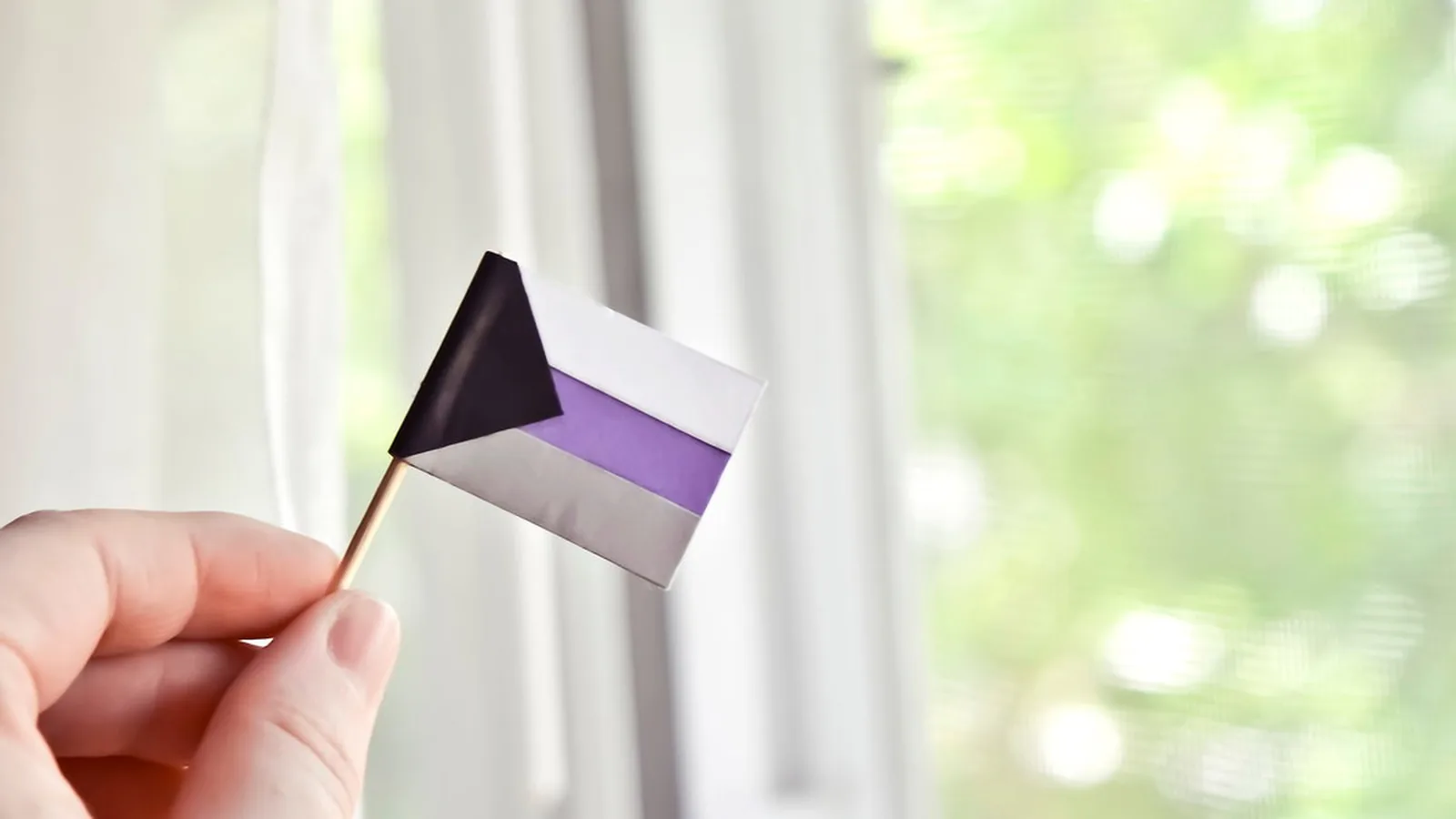
The Demisexual Flag: Colors, Meaning and Related Flags
The demisexual flag has a black chevron on the left, pointing in toward the centre. Behind it run a wide white stripe, a thin purple stripe and a wide grey stripe. Those are the same four colours as the asexual flag, rearranged. That shared palette is the point: demisexual people, who feel sexual attraction only after a close emotional bond forms, often place themselves on the asexual spectrum.
Read More
Romantic Orientation Explained: Biromantic, Panromantic and More
Romantic orientation is the pattern of who you are drawn to romantically: who you want to date, fall for, or share a life with. It sits beside sexual orientation, which covers who you are drawn to sexually. The UNC-Chapel Hill LGBTQ Center describes it as your pattern of romantic attraction by gender, whatever your sexual orientation is.
Read More
Sexual Attraction vs Romantic Attraction: The Difference, With Examples
Sexual attraction is wanting sexual contact with a particular person. Romantic attraction is wanting a romantic relationship with them: dates, closeness, being a couple. That is the core of sexual attraction vs romantic attraction. For most people the two show up together and aim at the same person, so they feel like a single crush.
Read More
What Happens During an Orgasm? Body and Brain, Phase by Phase
What happens during an orgasm is a fast release of tension that has been building through arousal. Muscles in the pelvis tighten and relax in a quick rhythm, the heart and lungs speed up, and the brain registers a burst of intense pleasure. Cleveland Clinic describes orgasm as the peak of sexual arousal, felt in the genitals and across the whole body.
Read More
What Does an Orgasm Feel Like? Signs and Why It Varies
What does an orgasm feel like? Most people describe a rising tension that builds to a peak, then a sudden release, with an intense, pleasurable feeling in the genitals that can spread through the body. At the peak, muscles low in the pelvis usually squeeze in a quick rhythm for a few seconds.
Read More
How to Have an Orgasm: Learning Alone, With a Partner, and What Gets in the Way
If you are wondering how to have an orgasm, start with a fact that surprises many people: it is often learned, not automatic. Recent data show 16 to 25 percent of women in the US, Australia, Canada and Sweden report orgasm difficulties. Many others orgasm alone but not with a partner. Both are common, and for many people they improve with practice and the right kind of touch, though there is no guarantee and no deadline.
Read More
Benefits of Orgasm and Its Side Effects: What the Evidence Says
Most claims about the benefits of orgasm rest on surveys of what people believe, not on tests of what changed in their bodies. One claim has solid long-term data behind it: men who ejaculate often have a lower rate of prostate cancer, though the studies show a link rather than a cause. Better sleep and a short lift in mood are plausible and widely reported. Pain relief is mixed. The idea that orgasms tone the pelvic floor or save a relationship is mostly repeated online.
Read More