The Demisexual Flag: Colors, Meaning and Related Flags
What the demisexual flag colors mean, stripe by stripe, what is known about its origin, and how the demi flag differs from the asexual and demiromantic flags.
General education, not medical advice. If something here worries you, talk with a clinician.
Table of Contents
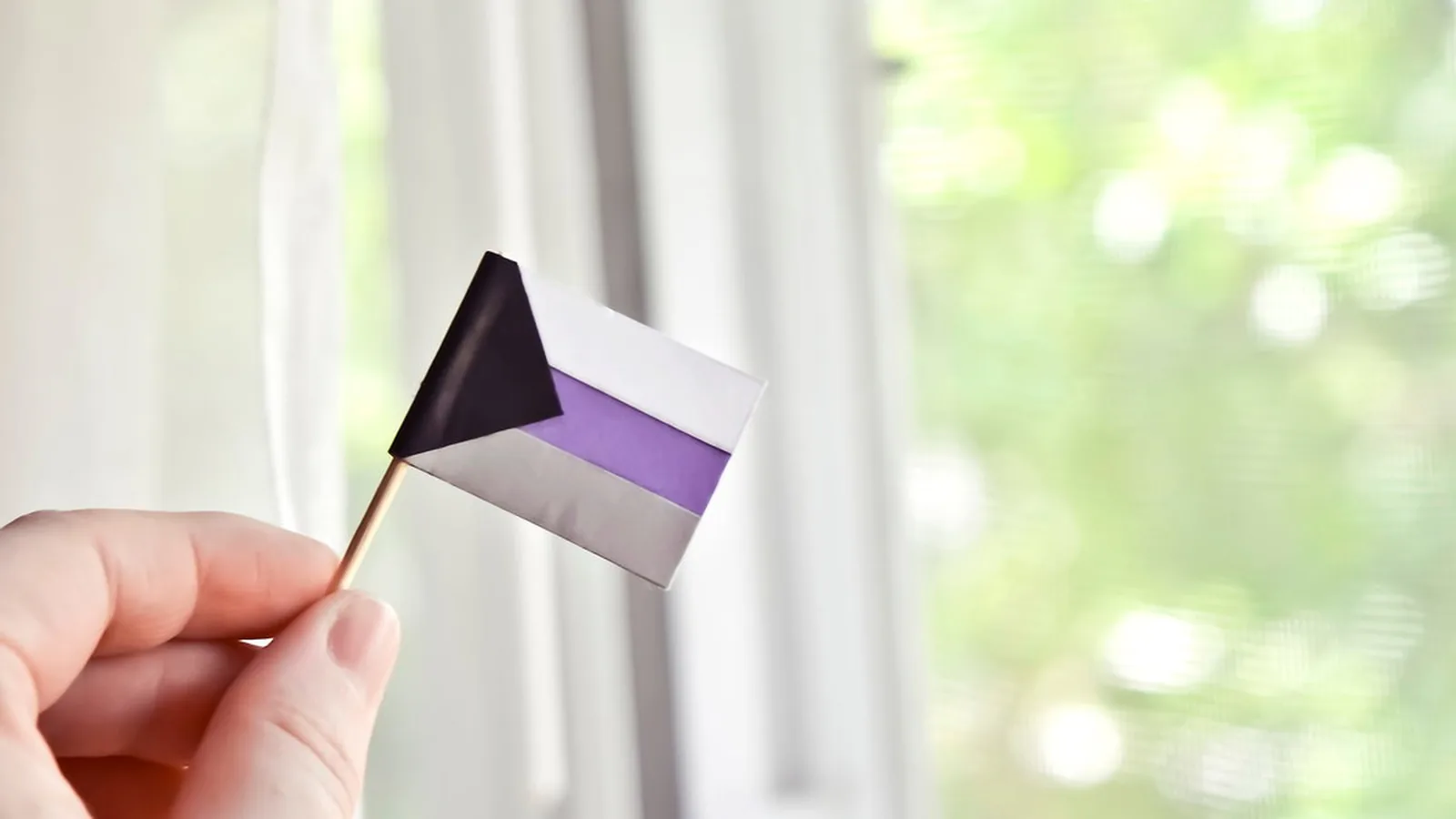
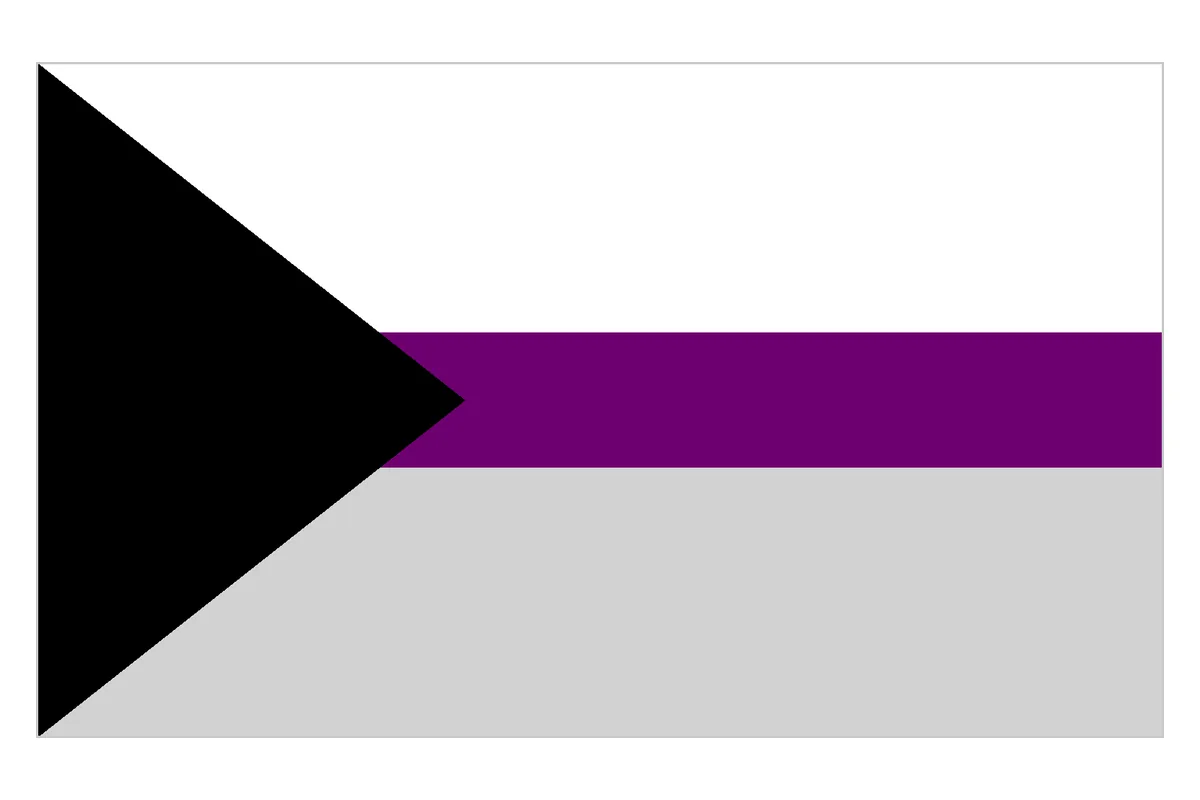
The demisexual flag has a black chevron on the left, pointing in toward the centre. Behind it run a wide white stripe, a thin purple stripe and a wide grey stripe. Those are the same four colours as the asexual flag, rearranged. That shared palette is the point: demisexual people, who feel sexual attraction only after a close emotional bond forms, often place themselves on the asexual spectrum.
This guide covers what each colour is said to mean, what is known about who made the demi flag, and how to tell it apart from its close relatives. It also looks at whether demisexuality counts as part of LGBTQ+. If you are still exploring the label itself, start with what demisexuality is and come back for the symbols.
Demisexual flag colors and what each one means
The four colours, stripe by stripe
Read the flag from the hoist, the edge nearest the pole, and work outward. The hex codes below come from the vector file on Wikimedia Commons, the copy most websites reuse. No official body publishes the demisexual colors, so treat these as a common reference.
| Part of the flag | Colour and hex code | Commonly given meaning |
|---|---|---|
| Chevron at the hoist | Black, #000000 | Asexuality and the ace spectrum demisexual people belong to |
| Top stripe | White, #FFFFFF | Sexuality, or the presence of sexual attraction |
| Thin centre stripe | Purple, #6E0070 | Community |
| Bottom stripe | Grey, #D2D2D2 | Grey-asexuality, or the grey area between sexual and asexual attraction |
Proportions matter as much as shades. In the Commons drawing, purple takes up one-sixth of the height, while white and grey are equal and each 2.5 times as tall as the purple band. A demi flag with four stripes of equal width has drifted toward a different design.
Why the meanings vary between sources
These meanings were assigned by the community, and sources word them differently. The grey stripe is the clearest example. LGBTQ Nation ties it to grey-asexuality and the grey-ace community. Mid-South Pride, a pride organisation, reads it as the grey area between sexual and asexual attraction. Both readings point at the same idea: demisexuality sits between little or no attraction and attraction that shows up often.
Purple has a backstory too. Heckin’ Unicorn, a pride retailer, links it to the purple colour scheme of AVEN, the Asexual Visibility and Education Network. Even the layout gets described loosely. Mid-South Pride calls the flag four horizontal stripes, which leaves out the chevron entirely. With no official standard, colour meanings can fairly differ between sources. The shape is different: every common version of the flag has a black chevron at the hoist, so a description that leaves it out is simply inaccurate.
Who made the demi pride flag?
Nobody can say for certain who designed the demi pride flag, or exactly when. USA Today states plainly that how and when it came to be is not clear. Heckin’ Unicorn agrees the designer is unknown and says the flag is believed to draw on the 2010 asexual flag.
What the record shows
The word came first. Healthline, citing a 2015 Wired report, dates the earliest recorded use of “demisexuality” to 2006, when an AVEN forum user coined it.
The flag’s trail is thinner. The Wikimedia Commons file carries a caption saying it was designed in 2013 by a user called Vimopu. Yet the same page shows the vector file was uploaded on 22 June 2013 as a redraw of an older image, Demisexual Flag.jpg. So the flag already existed as a picture before that upload, and the 2013 date may describe the copy rather than the first design.
Real-world sightings come later still. Flags of the World, a long-running flag reference site, lists San Francisco Pride 2017 as one of the earliest verified public uses. It also records the flag in Tel Aviv in 2018 and at Cologne Pride in 2019.
Why the trail goes cold
Many small pride flags were born online rather than at events. LGBTQ Nation describes how, in the 2010s, people on Tumblr, Reddit and Twitter coined new terms for their experiences, and flags followed. Posts were reshared without credit, accounts disappeared and early images lost their captions.
If you are sharing the history, keep it modest. Say the flag adapts the asexual flag’s colours and was online by June 2013. Then add that its designer is not reliably recorded. That version will not need correcting later.
Related flags: asexual, demiromantic, grey-ace and combined demi flags
Telling them apart at a glance
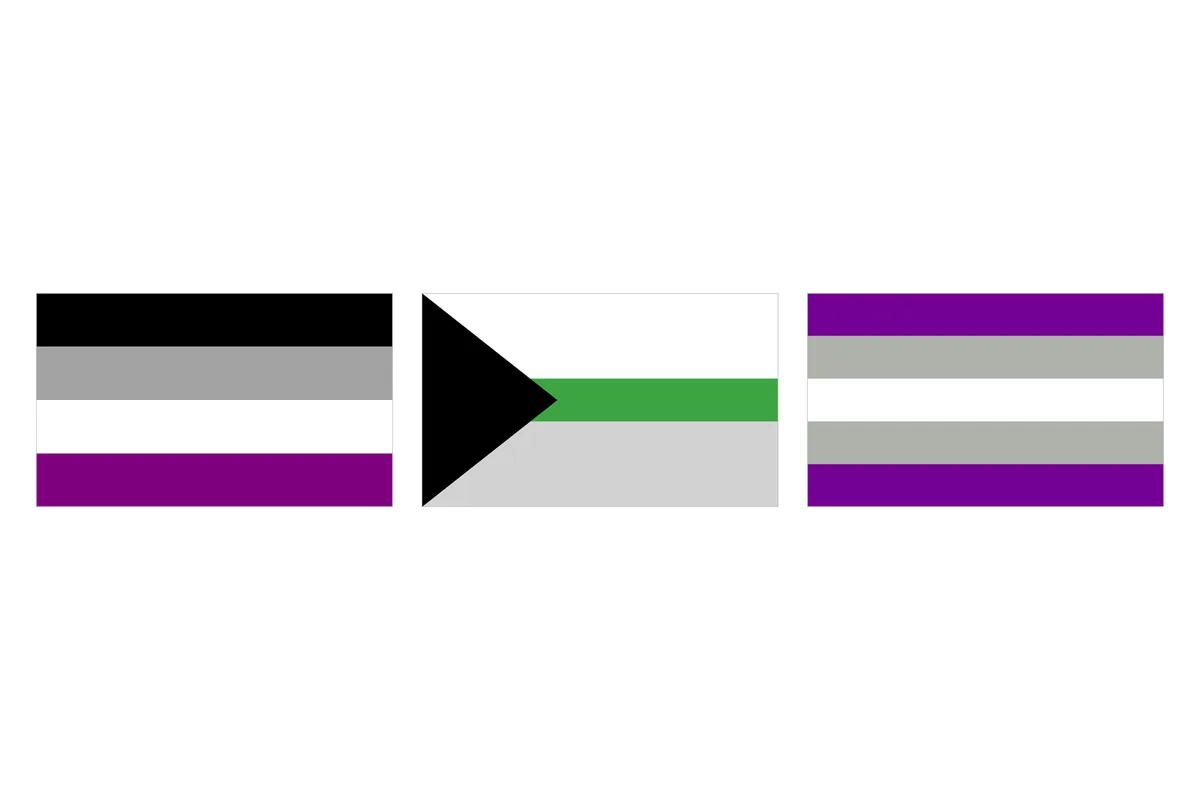
The demi flag belongs to a family of ace and aro flags that share colours and shapes. Two features do most of the work when you need to tell them apart: whether there is a chevron, and which colour sits in the middle.
| Flag | Layout | Colours | How established |
|---|---|---|---|
| Asexual flag | Four equal horizontal stripes, no chevron | Black, grey, white, purple | Chosen through an AVEN community vote in 2010 |
| Demisexual flag | Black chevron, thin centre stripe | Black, white, purple, grey | Widely used; designer unknown |
| Demiromantic flag | Same chevron layout as the demi flag | Purple swapped for aromantic green | The version Wikimedia Commons calls most often used |
| Grey-ace (graysexual) flag | Horizontal stripes, no chevron; stripe count and order vary between sources | Grey, white and purple | Community flag with no single agreed design; versions differ in how many grey and purple stripes they show |
| Combined demisexual demiromantic flags | Varies by artist | Mixes of the two palettes | Personal designs with no single agreed version |
Where the shared palette started
The asexual flag came out of a community process. AVEN’s archived forum shows the first round of flag voting opened on July 4, 2010, and members could even vote for having no flag. The winning design uses four horizontal stripes. Black stands for asexuality, grey for grey-asexuality and demisexuality, white for non-asexual partners and allies, and purple for community.
Notice the shift. On the ace flag, demisexuality is folded into the grey stripe. On the demi flag, black moves into a chevron and grey keeps its “grey area” sense. Some demi people fly both, and that is not redundant: one names the wider ace community, the other the specific experience.
Green chevrons and blended designs
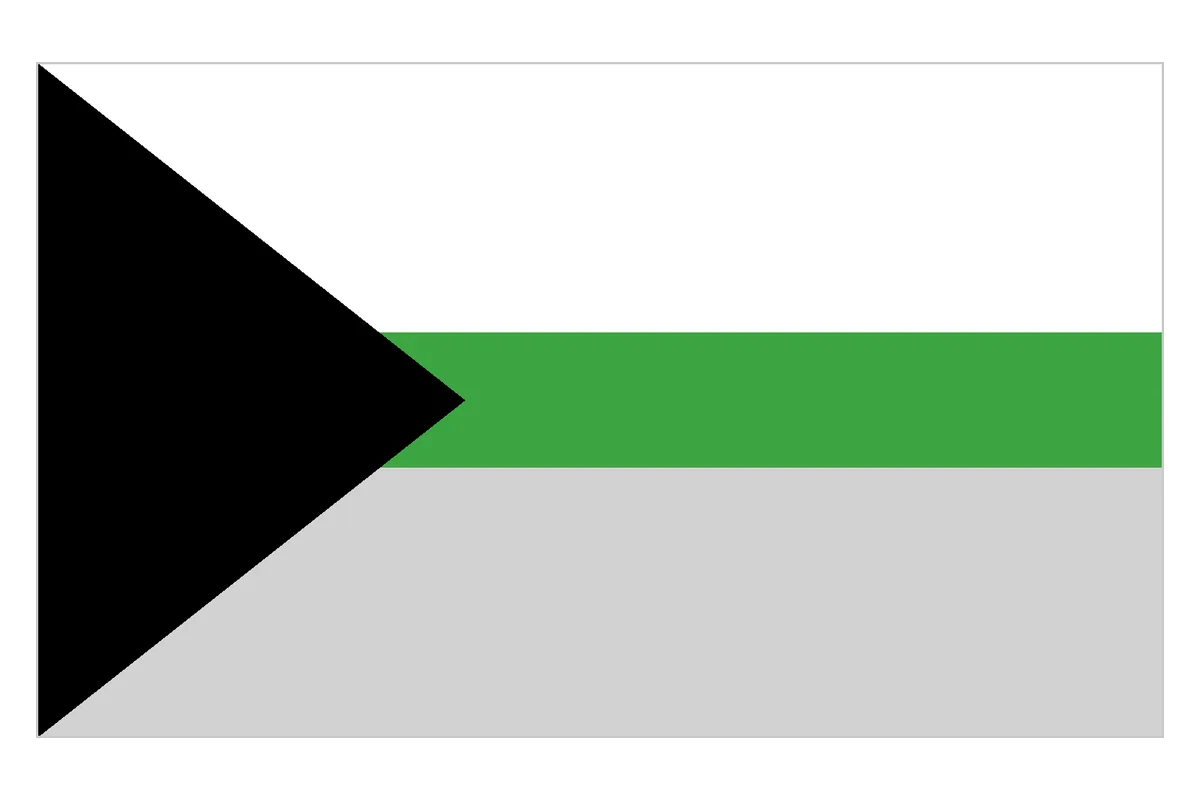
Demiromantic people feel romantic attraction only after a close bond forms, which is a separate question from sexual attraction. Their flag keeps the black chevron and swaps purple for the green of the aromantic flag. Gayety reports that Tumblr user @QueerAsCat first posted it on March 9, 2015, in a set of romantic orientation flags. Gayety also counts five known versions and says the meanings of the stripes are contested.
People who are both demiromantic and demisexual have no single official flag. Some fly the two flags side by side, while others use a blended design an artist drew. Credit the artist when you use one of those. For how romantic and sexual labels pair up, see romantic orientation explained, and for the wider family, our guide to asexual spectrum labels.
Is demisexual part of LGBTQ+?
For most people who use the label, yes. Demisexuality is generally counted under the A in LGBTQIA+, which stands for asexual. The flag’s black chevron makes the same claim visually.
Where organisations place it
USA Today explains that the I and A, for intersex and asexual, were added to the acronym in recent years. It describes asexuality as an umbrella term on a spectrum and lists demisexual among the identities under it. Mid-South Pride also places demisexuality on the asexual spectrum, and links the purple stripe to the broader LGBTQ+ community.
Research groups take the same view in practice. The Trevor Project’s national survey of LGBTQ young people counted asexual and graysexual write-in answers within its population. For the bigger picture, see what asexuality is.
Belonging is a personal call
Counting a group in and feeling part of it are different questions. Some demisexual people call themselves queer and march at pride. Others feel their daily life looks much like everyone else’s and do not claim the word. Both positions are fair, and neither makes the orientation more or less real.
Demisexuality also says when attraction can appear, not which genders it is aimed at. Ace people often add hetero-, homo-, bi- or pan- before “romantic” to describe who they are drawn to. So a demisexual person can also be straight, gay, bi or pan, and may fly the demi flag alone or next to another flag.
Using the demisexual pride flag respectfully
At pride events and on merchandise
The demi flag has been carried at pride for years, from San Francisco in 2017 to Cologne in 2019. If you bring one, expect a few people to ask what it is. A short answer works: it is the demisexual pride flag, and demisexuality sits on the asexual spectrum.
Check a flag before you buy it. Flags of the World notes that the shades of grey and purple vary between real flags, so a slightly different purple is normal. The layout is less forgiving. Look for the black chevron at the pole side, white on top, a thin purple band and grey at the bottom. If the product photo shows four equal stripes of black, grey, white and purple with no chevron, it is the asexual flag, whatever the title says.
On profiles and dating apps
For many people, the flag lives online rather than on a pole. A flag in a bio, a profile frame or a header image lets you choose how visible to be, and you can remove it in seconds. On a dating app, it can tell matches early that attraction takes time for you.
When you post a flag image, add a short text description for people using screen readers. Naming the flag and its black chevron, white, purple and grey stripes is enough. The basic flag file on Wikimedia Commons is marked as public domain, but that marking applies to that file. Check the licence of whichever image you actually use, because artwork built on the flag can carry its own terms. The demiromantic flag file on Commons, for example, carries a licence that requires credit and a link back.
Flying it without outing anyone
Wearing a flag tells people something about you. Handing one to someone else, or tagging them in a post with it, tells people something about them. Never use a flag to label a friend, partner or relative who has not chosen to share their orientation.
Allies can fly the demi flag too. A short caption saying you support the demisexual people in your life keeps the meaning clear. Before you post a pride photo, ask the people in it whether they are happy to be seen beside that flag in public.
FAQ: what else people ask about the flag
What does the demi flag look like?
It has a black chevron on the left edge, pointing toward the middle. Behind it sit a wide white stripe on top, a thin purple stripe in the centre and a wide grey stripe at the bottom. The colours match the asexual flag, which signals that demisexuality sits on the ace spectrum. Shades vary a little from one maker to the next.
What is the difference between the asexual flag and the demisexual flag?
The asexual flag has four equal horizontal stripes of black, grey, white and purple, with no chevron. By contrast, the demisexual flag uses the same colours but moves black into a chevron at the hoist and shrinks purple to a thin band. The meanings shift slightly too. On the ace flag, the grey stripe already includes demisexuality.
Is demiromantic part of LGBT?
Demiromantic identity falls on the aromantic spectrum, and its flag reuses the demi layout with aromantic green. The A in LGBTQIA+ stands for asexual, so demiromantic people who are also ace are covered by it directly. Some LGBTQIA+ glossaries also read the A as aromantic, so aro people who are not ace may count themselves in as well; no single body sets the definition. As with demisexuality, each person decides whether the wider community feels like home.
Is there a demisexual symbol besides the flag?
The flag is the main demisexual symbol, and its colours do most of the work. People turn those colours into pins, wristbands, profile frames and emoji-style flags. The sources in this guide do not describe a separate official demisexual symbol. If you meet one, it is likely a community or artist design rather than a standard.
What is demisexual panromantic?
It means someone feels sexual attraction only after a strong emotional bond forms, and can be romantically drawn to people of any gender. Ace-spectrum people often add a prefix such as pan- before “romantic” to say who they are drawn to. The Trevor Project found young people describing themselves with pairings like this, for example asexual panromantic.
Reading the demi flag at a glance
You can spot the demisexual flag by two details: a black chevron at the pole side and a thin purple band between wide white and grey stripes. Its colours come straight from the asexual flag, which ties demisexuality to the ace spectrum. The commonly given meanings are asexuality, sexuality, community and the grey area in between, though different groups word them a little differently.
Its origin is honestly unclear, so share it that way. Among its relatives, the demiromantic flag is well established, while most blended designs are personal art that deserves credit. Fly it on a pole, a pin or a profile, and let other people choose their own flags. For the identity behind the symbol, read what demisexuality is.
Related reading
- Demisexual Meaning: Attraction That Grows From an Emotional Bond
- The Asexual Spectrum: Ace Labels Sorted by What They Describe
- What Is Asexual? The Meaning of Asexuality and Ace Identity
Sources
- All about the demisexual flag - LGBTQ Nation
- Asexual and demisexual Pride flags: Colors and meaning explained - USA Today
- File:Demisexual Pride Flag.svg - Wikimedia Commons
- What is the Demisexual pride flag and what does it mean? - Heckin’ Unicorn
- Demisexual Pride Flag - Mid-South Pride
- Demisexuality: What Does It Mean? - Healthline
- Demisexuality flag - Flags of the World (FOTW)
- File:Asexual Pride Flag.svg - Wikimedia Commons
- Asexual Flag Voting (First Round) - Asexual Visibility and Education Network (AVEN)
- File:Demiromantic Pride Flag.svg - Wikimedia Commons
- Graysexual Pride Flag - Mid-South Pride
- What Is The Demiromantic Flag? - Gayety
- What is asexuality? What the ‘A’ in LGBTQIA stands for. - USA Today
- Sexual Orientation Diversity Among LGBTQ+ Young People - The Trevor Project