Edge of Bed Sex Positions: Height Setup, Butterfly, T-Bone and More
How to set up edge of bed sex positions: match bed height with pillows or kneeling, then try the butterfly sex position, T-bone and more without strain.
General education, not medical advice. If something here worries you, talk with a clinician.
Table of Contents
Edge of bed sex positions put one partner on the mattress and the other on the floor. The partner on the bed lies back or sits right at the edge, while the other stands or kneels in front of it. That small move changes three things at once: how your hips line up, who has leverage, and who carries the weight.
Most guides name a position and stop there. This one starts with the setup, because the bed itself is usually the problem. A mattress that is too low, too high or too soft at the edge is the common reason sex on the edge of the bed feels awkward. Below you will find a height table and five positions, each with notes on who it suits and what it strains, followed by advice on who should take extra care.
Why the bed edge is its own category
Who is where
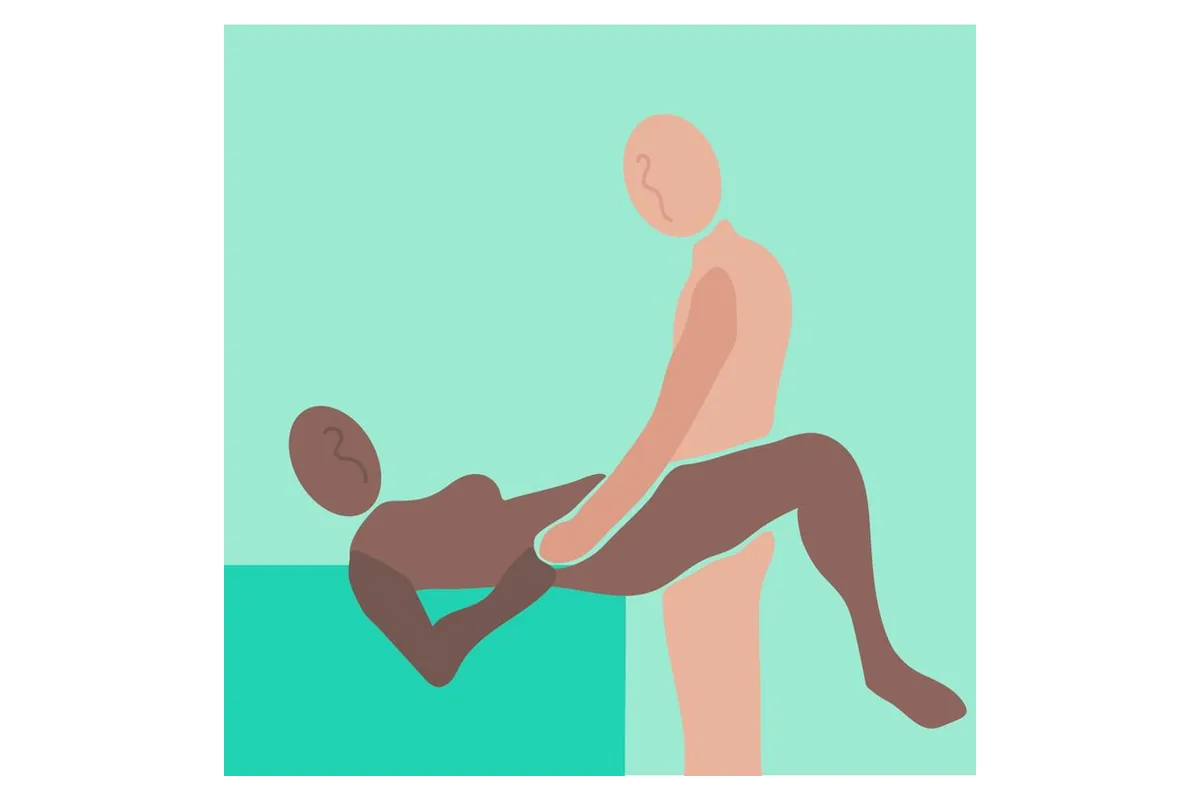
The basic edge of the bed sex position has the receiving partner on their back near the edge, legs hanging off, while the other partner stands on the floor. Some guides add a kneeling option, so the floor partner can bring their hips down to the right level. Either way, the person on the floor has both feet or both knees planted on something that does not give.
That planted stance is where the control comes from. Women’s Health UK notes that because the standing partner is braced, the lying partner can ask for whatever pace they want. The partner on the bed keeps both hands free and does not have to hold any part of their body up.
Who carries the weight
Away from the edge, someone usually props themselves up on their arms or knees. At the edge, the mattress holds the lying partner and the floor holds the standing one. In the lying-back setups, neither partner holds their own torso up or carries the other’s full body weight. That is why they can feel less tiring than positions where one partner is on top. Legs resting on a shoulder still add some load, as the butterfly notes below explain.
That split also explains why bed edge sex positions keep turning up in guides to height difference sex positions. One sex-product guide lists the receiver at the edge of the bed as a fix for couples of different heights. The taller partner simply stands or kneels until their hips line up. Cosmopolitan gives the same advice, with the taller partner kneeling beside the bed. A Danish sex shop’s guide makes the wider point that ordinary furniture can rescue positions a big height gap would otherwise rule out.
Getting the height right at the edge of the bed
Reading your bed height against your partner’s legs
The goal is for the lying partner’s hips, resting at the edge, to sit at about the same height as the standing partner’s hips. Most beds are built for sitting instead. A mattress retailer puts standard bed height, measured from the floor to the top of the mattress, at 18 to 25 inches. Bed retailers use a simple test of fit: sitting on the edge, your knees should bend at about 90 degrees.
Because a standing adult’s hips are well above their seated knee height, an ordinary bed often sits low for the partner standing at the edge of the bed. Low platform beds, at around 16 inches, sit lower still, while antique frames can reach about 36 inches. To check yours, have the standing partner stand beside the bed and note where the top of the mattress meets their thigh. Then match what you notice to the table.
| What you notice | Likely cause | What to change |
|---|---|---|
| The standing partner bends their knees or hunches forward | The mattress top sits below their hips, common with low or platform beds | Raise the lying partner’s hips on a firm cushion or wedge, or have the floor partner kneel on a pillow |
| The standing partner is up on their toes | The mattress top sits above their hips, from a tall frame, a thick mattress or a shorter standing partner | Stand on a sturdy, non-slip step that cannot tip or roll, or have the lying partner shift further off the edge with their feet on the floor |
| The hips line up, then sink a few minutes in | A soft edge compressing under weight | Add a firm cushion, move to the firmest part of the edge, or use a sturdier surface |
| The lying partner slowly slides toward the floor | Smooth sheets or an edge that slopes down | Put a towel under the hips and shuffle back a little, then reset the height |
| A kneeling partner ends up too low, even on a pillow | The bed is close to their standing height after all | Stand instead, with the feet spread wider to drop the hips a little |
Raising the hips with pillows or a wedge
When the bed is low, the fix goes under the lying partner’s hips. WebMD suggests pillows or a cushion under the hips for a better angle. A firm cushion keeps its shape far better than a soft bed pillow, which flattens as soon as weight lands on it.

Sex wedges are the purpose-built version. Cosmopolitan’s experts like them because they tilt the receiving partner’s hips up and take pressure off knees, wrists and backs. A folded duvet or a couch cushion can stand in for one. Add height a little at a time, since a tall stack can tip the pelvis further back than is comfortable.
Lowering by kneeling
When the bed is closer to kneeling height, the floor partner can kneel instead of stand. Cosmopolitan suggests the taller partner kneel next to the bed with a pillow under the knees. WebMD likewise notes that a pillow helps the partner who is on their knees. A folded towel also works on a hard floor. Kneeling drops the hips a long way in one step, so pair it with a cushion under the lying partner if the gap overshoots.
When the mattress edge is too soft
A soft edge gets little attention in most guides, yet it can undo the whole setup. Sleep Foundation describes edge support as how sturdy the mattress perimeter feels. It warns that weak edges can collapse under weight and could lead to falls. At the bed edge, that sag does two things. The lying partner’s hips drop below where you set them, and the slope nudges their body toward the floor.
Construction makes a difference. Memory foam usually does not add edge support, while firmer high-density foam wrapped around coils holds up well. Perimeters also compress more under heavier bodies, and Sleep Foundation says people over 230 pounds may need a stronger edge. A cushion under the hips only raises them; it does not make a weak edge any stronger. If the edge dips under you, use a stretch that genuinely holds steady, or move to a surface that does, such as a solid couch or sturdy bench at a similar height.
Edge of bed sex positions to try
Butterfly sex position
The butterfly sex position is the best-known edge setup. WebMD defines it as the receiver on their back at the edge of a bed or other surface, with the other partner standing or kneeling in front. Cosmopolitan describes the same shape, with the receiver’s legs lifted onto the standing partner’s shoulders like wings. It adds that the position works for any gender. Think of it as the edge-of-bed cousin of the missionary position, with the torsos apart instead of pressed together.
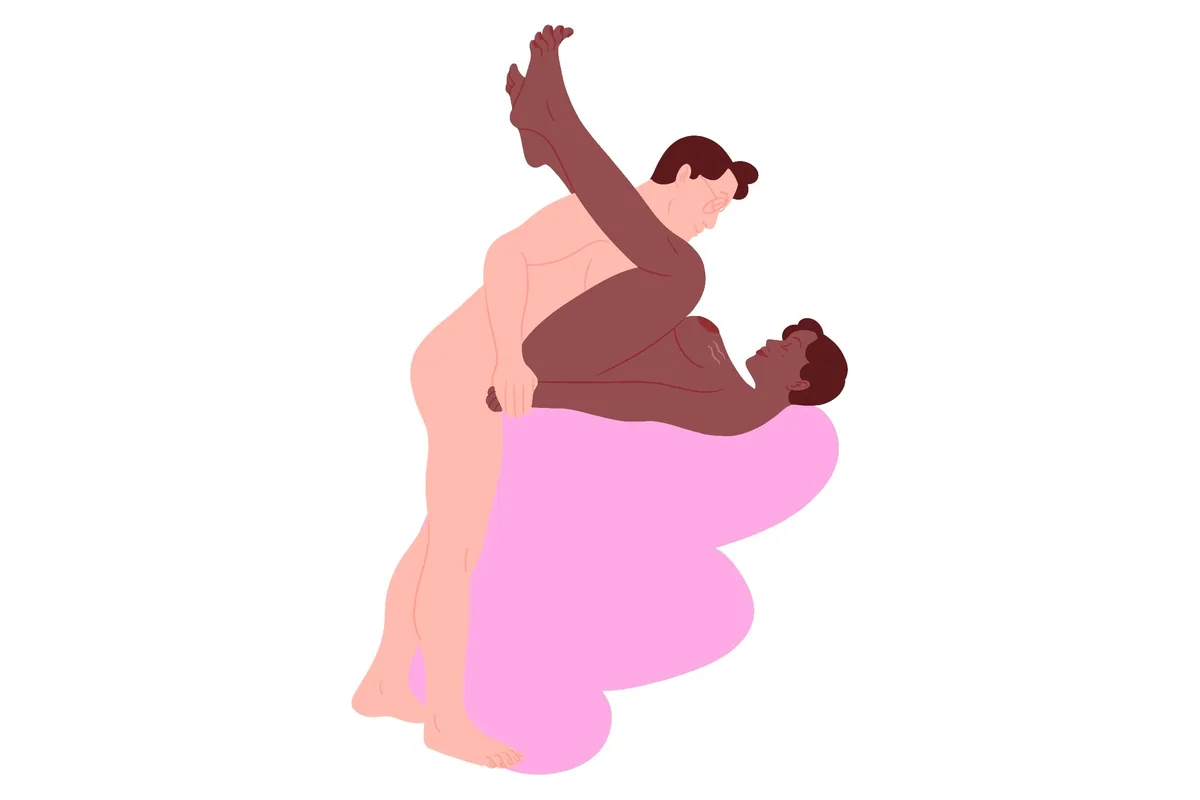
It suits a receiver who wants to rest, since the standing partner does most of the work. The legs can go on one shoulder, on both, or straight toward the ceiling. Each choice changes the stretch. Legs held straight pull on the backs of the thighs, and legs pushed toward the chest fold the hips hard. WebMD warns the upright partner not to press too much weight onto the other person’s legs. On a low bed, the standing partner’s lower back also works harder than it should.
T-bone sex position
This is the name where sources part ways, and no health publisher we found defines it. The name suggests two bodies crossing at right angles. A sex-toy retailer describes that shape under a different name, the T-square, with one partner’s body perpendicular to the other’s, forming a T. It lists sitting on the edge of a bed or chair as one variation. We did not find a tested or expert-described way to set up that right-angle shape at a bed edge, so this guide does not give step-by-step instructions for it.
RSVP Live used the T-bone name for something else entirely. Its version has the receiver face down with legs off the side of the bed and the partner standing behind. So ask which version your partner means. The right-angle shape may appeal to someone who dislikes a deep hip fold, because the legs drop to one side instead of lifting high. The likely price is a twist through the lying partner’s lower back and hips. Keep that twist small, and put a pillow between the knees if it pulls.
Sitting at the edge, face to face
Here the receiving partner sits on the edge rather than lying back, and the other partner stands or kneels facing them. Of all the bed positions for sex covered here, it gives the most room for kissing and eye contact. Medical News Today lists sitting at the edge of the bed among the comfortable options during pregnancy.
The strain lands on the sitting partner’s lower back, which has nothing behind it. Leaning back on straight arms tires the wrists quickly, so a firm stack of pillows behind the hips makes a better prop. Height matters most in this one. With an ordinary bed, a kneeling partner often lines up better than a standing one.
Kneeling on the bed, facing away
This is the edge version of doggy style. The receiving partner kneels on the mattress near the edge, facing away, and the other partner stands behind on the floor. A height-difference guide calls it elevated doggy style. It suggests pillows under the receiver’s knees for a height boost, or a higher surface such as a sofa. Of the five, it handles the biggest height gaps, because the receiver’s height can rise or fall with cushions.
The load sits on the receiver’s knees and wrists. Dropping onto the forearms spares the wrists but changes the curve of the back. University of Waterloo researchers tracked spine movement in 10 healthy couples, not in people with back pain. From that, they recommend that women whose back pain worsens when bending forward support themselves on their hands rather than their elbows. The standing partner’s height is set by the floor, so a sturdy, non-slip step that cannot tip or roll helps a shorter partner here.
Waterfall, in brief
The waterfall goes one step further, with the head and shoulders off the mattress. Guides disagree on who hangs. Kinkly puts the penetrating partner face up with head and torso off the edge and the receiver on top. Sex therapist Katie Mitchell has the receiving partner let their head and upper body hang slightly off instead. Both put the head below the hips, which raises eye pressure and blood pressure, and nobody has tested a safe duration. The waterfall sex position guide covers both versions, the head-down risks and gentler options.
Where the strain lands at the bed edge
The standing partner’s knees and lower back
The standing partner does most of the moving, and much of that work goes through the lower back. A University of Waterloo motion-capture study of 10 couples found that, in every position tested, most of the man’s lower-back movement was forward bending. The study did not test anyone standing at a bed edge. Still, it is reasonable to expect a low bed to add forward bending, since a standing partner has to hunch to line up.
Raising the lying partner’s hips lets the standing partner stand taller. In kneeling versions the knees take over the load, so pad them well. Switching between standing and kneeling every so often spreads the work around.
The lying partner’s hips and hamstrings
For the partner on the bed, the strain depends on where the legs go. Legs held straight up or on the shoulders stretch the hamstrings, the muscles along the back of the thigh. Legs pushed toward the chest fold the hip deeply, which is exactly the movement people recovering from hip surgery are told to limit.
Bending the knees eases the stretch. So does resting the feet on the standing partner’s chest or letting the legs hang over the edge. A wedge under the hips changes the angle without anyone having to fold further.
Sliding off the edge and wrist load
Sliding is the bed edge’s own risk. Smooth sheets and a soft perimeter both let the lying partner creep toward the floor, and every forward movement from the standing partner moves them a little more. A towel under the hips adds grip, and the standing partner can also hold the lying partner’s hips or thighs to keep them in place.
Feet matter as well, since bare feet slip on a smooth wooden floor, so a non-slip mat under the standing partner keeps them planted. A loose rug can slide on a smooth floor, so make sure it grips. Wrists come into play whenever someone leans on their hands, as in the kneeling and sitting versions. Short spells on the hands, with breaks onto the forearms or a pillow, keep them from aching.
Who should take extra care

Back pain
Choose by what triggers your pain. University of Waterloo researchers tracked spine movement in couples and built their advice around pain type. Their best-known finding is that spooning, long the default advice, can be one of the worst positions for some kinds of back pain. For men whose pain flares when bending forward, the study ranked side-lying least recommended and a kneeling rear-entry version most.
Put simply, if bending forward is your trigger and you are the standing partner, keep the hips high enough that you can stand tall. If arching your back is the trigger, skip head-down versions such as the waterfall.
Hip or knee problems
After a hip replacement, the American Academy of Orthopaedic Surgeons lists posterior precautions that include not bending the hip past 90 degrees. The academy says sexual activity may resume within several weeks, depending on your condition, and to ask your doctor first. Several edge setups reach or pass that limit. These include legs pushed toward the chest, legs on the shoulders or pointed at the ceiling, and kneeling on the bed with the hips sitting back. Until your surgeon clears it, skip those and keep the legs lower, for example hanging over the edge. Arthritis New Zealand adds that your care team may advise against kneeling for six weeks after a hip replacement.
Knees raise a separate question. Kneeling after a knee replacement can take months to become comfortable, and the timing varies with the operation and the person, so ask your surgeon or physiotherapist when to try it. Until then, the partner with the new knee can stand instead of kneel.
Pregnancy
From the second trimester on, lying on your back may compress a major blood vessel, which can make you dizzy. The American College of Obstetricians and Gynecologists adds that it may also reduce blood flow to the fetus. That advice makes the butterfly and the T-bone poor fits later in pregnancy. Medical News Today lists sitting at the edge of the bed as one comfortable option and side-by-side spooning as another. If your pregnancy is high risk, check with your doctor or midwife first.
Dizziness and head-down versions
Hanging the head below the heart raises pressure in the head and eyes. A small Pacific University study inverted 11 healthy young men for 2.5 minutes, and their average eye pressure rose from 12.5 to 25.1 mmHg. The author concluded that inversion may be unsuitable for people with high blood pressure, glaucoma or ocular hypertension. That study used a full inversion chair, so a slight hang off the bed edge is a milder version of the same effect. If anyone feels dizzy, stop and sit up slowly.
Frequently asked questions
What is the butterfly pose in bed?
The butterfly is the edge-of-bed position where the receiving partner lies back at the edge while the other partner stands or kneels in front. The legs usually rest on the standing partner’s shoulders, which is where the name comes from. It has nothing to do with the yoga butterfly, a seated hip stretch with the soles of the feet together.
Are edge of bed sex positions good for height difference?
Yes, they are among the easiest fixes for a height gap. The floor partner can kneel to come down, or a sturdy, non-slip step that cannot tip or roll can bring a shorter partner up. After that, cushions under the hips fine-tune the remaining difference. Because the mattress and the floor take most of your body weight, you can adjust in small steps until your hips line up.
What are some good sex positions for seniors?
Supported positions tend to work best, and the bed edge is one of the most supported setups. The mattress takes the lying partner’s weight, so neither of you has to hold a pose. Arthritis New Zealand suggests a warm bath or shower beforehand, plus pillows or rolled-up towels under sore joints. The low-effort lying-down positions are worth a look as well.
What are some good sex positions for overweight people?
Positions where your bodies are not stacked on top of each other often work well. Plus-size educator Kelly Shibari told Cosmopolitan that bodies sometimes fit better that way because of a belly, a large bust or breathing. The bed edge fits that description, since you meet at the hips with room around the torso. A firm edge matters more here, because a mattress perimeter compresses more under greater weight.
Setting up your bed edge
Start with the height, then choose the position. Stand beside the bed and notice where the top of the mattress meets the standing partner’s hips. Close any gap with a firm cushion, a pillow to kneel on or a sturdy, non-slip step that cannot tip or roll, and check that the edge holds its shape and the floor gives good grip.
After that, choose by comfort. The butterfly suits a receiver who would rather rest, the sitting version suits couples who want closeness, and kneeling on the bed handles the largest height differences. Whoever is carrying the strain should set the pace. If a knee, hip or lower back starts to complain, change the setup before you carry on.
Related reading
Sources
- Exactly How to Do the ‘Edge of the Bed’ Sex Position - Women’s Health UK
- 6 Best Sex Positions for Height Difference - The Enhanced Male
- Sex Hacks For When You and Your Partner Are Different Sizes - Cosmopolitan
- Penetrative sex positions for big height differences - PEECH
- Do Bed Height and Mattress Height Matter? - Mattress World Northwest
- Bed Height Guide: How High Should Your Bed Be? - Turmerry
- The Butterfly Sex Position: What It Is - WebMD
- How We Determine Edge Support Ratings - Sleep Foundation
- How to Do the Butterfly Sex Position and 5 Variations - Cosmopolitan
- The T-Square Sex Position Guide - EINSEO
- The T-Bone is the hot sex position that’s driving couples wild - RSVP Live (Kayla Walsh)
- Sex during pregnancy: Safety, effects, and positions - Medical News Today
- New findings will improve the sex lives of women with back problems - ScienceDaily (University of Waterloo)
- The Waterfall Position - Kinkly
- July Position of the Month: The Waterfall - Heights Family Counseling (Katie Mitchell, M.A., LPC, CST)
- Male Spine Motion During Coitus: Implications for the Low Back Pain Patient - Spine (University of Waterloo), via PMC
- Activities After Total Hip Replacement - OrthoInfo - American Academy of Orthopaedic Surgeons
- How to have better sex and intimacy if you have arthritis - Arthritis New Zealand
- Can You Kneel After a Knee Replacement? - Curovate
- Can I sleep on my back when I’m pregnant? - American College of Obstetricians and Gynecologists
- The effects of inversion chair therapy on intraocular pressure and systemic blood pressure - Pacific University (MS Vision Science thesis)