Missionary Position: Variations, Angles and Comfort
What is missionary position? Where the name really came from, legs up and launch pad variations, the coital alignment technique, and comfort fixes for back pain.

General education, not medical advice. If something here worries you, talk with a clinician.
Table of Contents
The missionary position is any face-to-face position where one partner lies on their back and the other lies on top. Most of the surveys cited below rank it as the position people use most often. In a 2020 online survey of 21,038 Czech adults, face to face with the man above came first. That sample was not representative, so the ranking is a guide rather than a population figure.
That popularity hides how much the position can change. A pillow, a shift of the legs or a move to the edge of the bed alters the angle, the depth and the effort for each partner. This guide covers where the strange name came from and compares the main variations in one table. It also looks at the research on the coital alignment technique and explains how to adjust things for a sore back, tired arms or pain with depth.
What is missionary position, and how common is it?
Who is where in the basic setup
So what is missionary position, in body terms? One partner lies on their back. The other lies over them, face to face, usually supported on the forearms or hands. WebMD adds that the partner on top usually sets the speed and depth. The Encyclopedia of Sex and Gender describes the same layout, with the lower partner’s legs either flat on the bed, raised, or wrapped around the partner above.
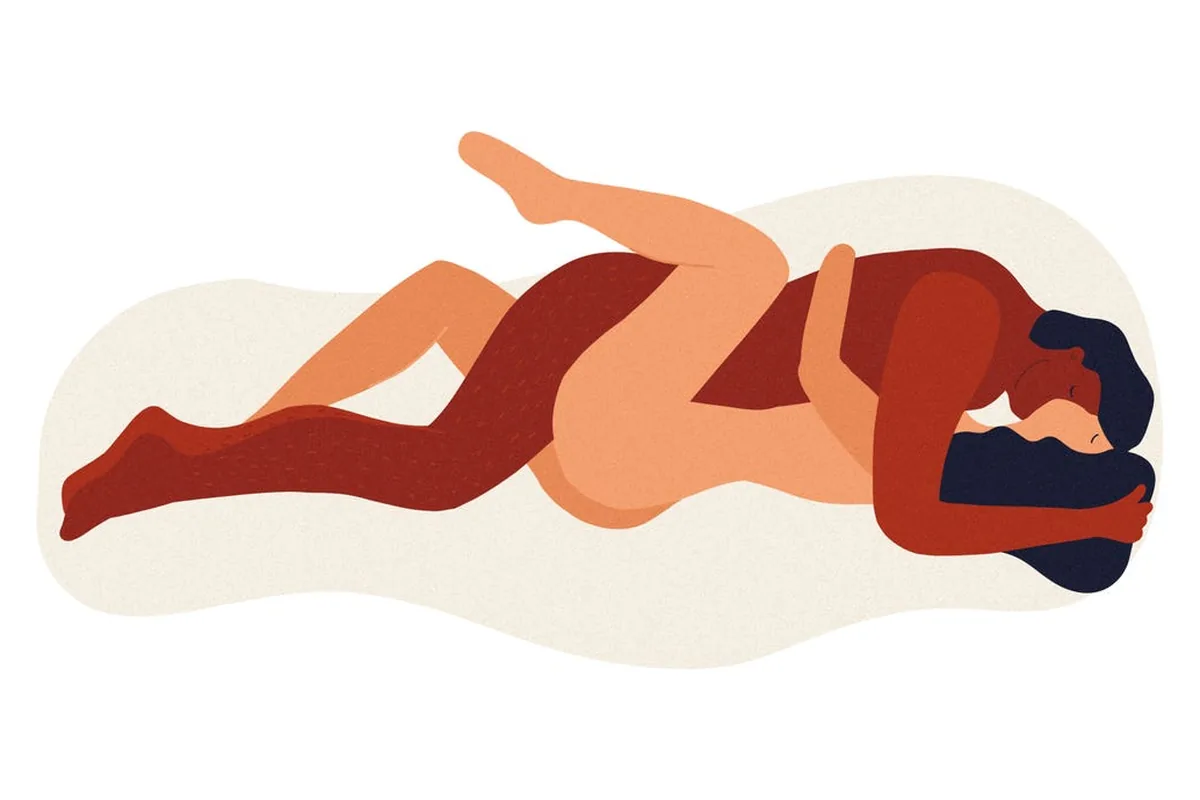
Those leg choices are where every variation later in this guide begins. The top partner can also hold their weight on straight arms, or lie lower and let some weight rest on the partner below.
The sources differ mainly on how wide the label reaches. WebMD says that in the late 1960s and early 1970s the term described sex between a man on top and a woman underneath. That older meaning is why “man on top sex position” is still a common search. Both sources now treat missionary style as open to couples of any gender, but only WebMD stretches it to sex without penetration.
What surveys say about how often couples use it
The figures span almost seventy years and point the same way. Kinsey’s 1953 study of female sexuality found that 91 percent of married women used this position most often, and 9 percent used it exclusively.
The largest modern data set is the Czech survey mentioned above. It asked 21,038 adults about 13 positions, and face to face with the man above was the most used, both over a lifetime and over the past 5 years, with woman on top and rear entry among the next most common. The authors are careful to say their online sample was not representative, so the ranking should not be read as a share of everyone’s sex life.
Commercial polls rank it a little lower. Men’s Health reports a 2024 Bedbible survey that put missionary second, behind doggy style, with 22.5 percent calling it their go-to. Bedbible is a commercial website rather than a research group, so treat that figure as a market poll.
Why is it called missionary position?
The story about missionaries
Ask why is it called missionary position and most people repeat the same tale. Christian missionaries, it goes, taught converts that this was the only proper way to have sex. WebMD calls this popular lore and notes that some scholars consider it an urban legend.

Sex historian Kate Lister goes further. She told DW there is no evidence that missionaries promoted the position, and that the story spread through books, medical texts and dictionaries anyway. Speaking to Deutsche Welle, she called the tale “a giant rumor”.
What Robert Priest found in Kinsey’s source
The trail leads back to Alfred Kinsey. In his 1948 book on male sexual behavior, Kinsey cited anthropologist Bronislaw Malinowski’s 1929 study of the Trobriand Islands. Kinsey wrote that islanders mocked the “English-American position” and called it the missionary position.
Anthropologist Robert J. Priest went back to Malinowski’s book for a 2001 paper and found that the exact term never appears. Malinowski did write that the islanders disliked the European position. He said they had learned of it from white traders, planters or officials, not missionaries. Missionaries come up in a different passage, where couples holding hands in public were said to act “missionary fashion”. That phrase was about public affection, not sex.
Mental Floss quotes Priest’s conclusion that Kinsey “coined a new expression while thinking he was reporting an old one”.
The parts historians still disagree on
The sources do not agree on every detail. DW and Mental Floss credit Kinsey’s 1948 book on men with the phrase. The Encyclopedia of Sex and Gender, following the Oxford English Dictionary, points to Kinsey’s 1953 volume on women instead.
Dating the term’s spread is fuzzy too. Lister says it crops up around the 1960s, while WebMD places its use in the late 1960s or early 1970s. Either way, the evidence points to Kinsey’s bestsellers, not to mission stations, as the source of the name.
None of this means missionaries left sex lives untouched. DW notes they did impose new sexual morals in places such as colonial India. What the record does not support is the claim that they taught this particular pose.
Missionary position variations compared
Two adjustments drive most variations
Nearly every missionary variation comes from changing two things: how high the lower partner’s hips sit, and where their legs go. Sex therapist Nan Wise told Women’s Health that a pillow under the lower back tips the pelvis up and allows deeper penetration. Leg position changes the feel in a different way. Sexologist Lilithfoxx says keeping the legs closer together raises pressure and friction instead.
A few versions also move control to the partner underneath. With feet pressed on the kneeling partner’s chest, the lower partner sets the depth, and Men’s Health notes that higher feet mean shallower penetration. Psychologist Laurie Mintz says that control suits women with trauma histories.
Pillow, legs up, launch pad and more side by side
The table sticks to body placement, effort and comfort. Guides use different names for the same setup, so go by the description rather than the label.
| Variation | What changes | Who it may suit | Watch for |
|---|---|---|---|
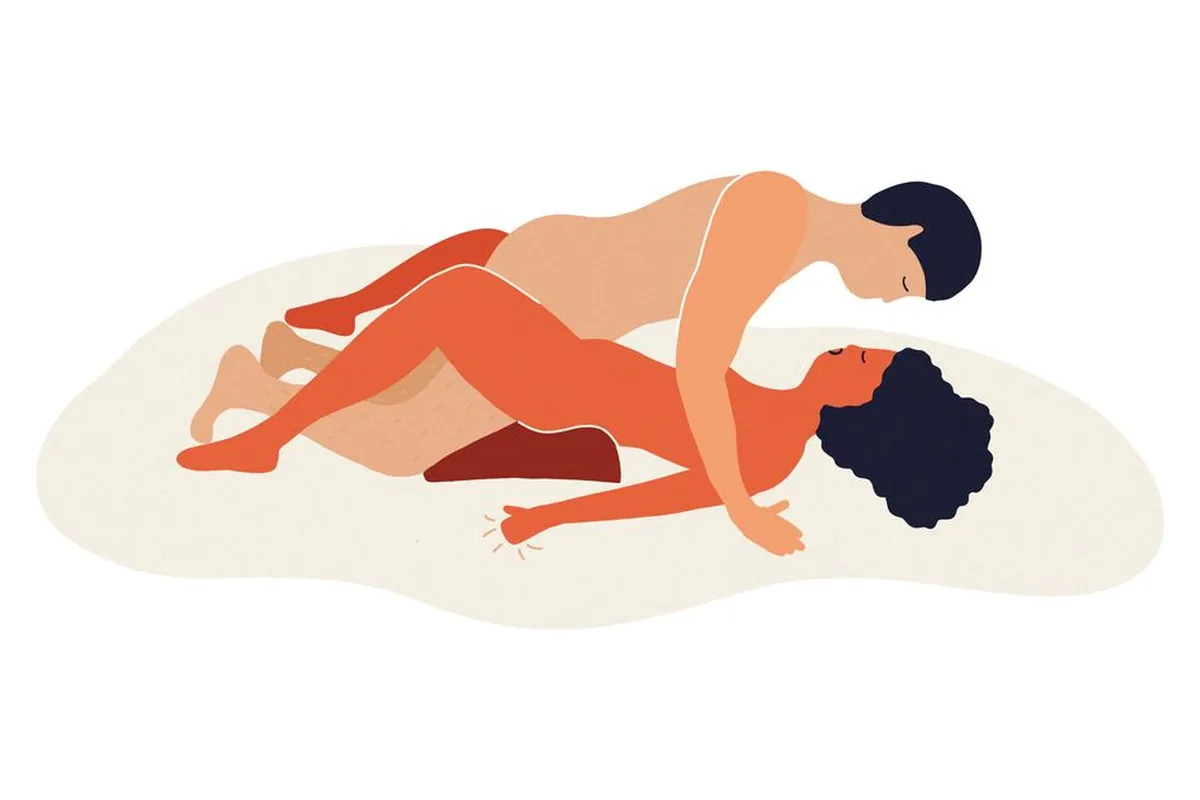
| Pillow under hips | A pillow or wedge lifts the lower partner’s pelvis and changes the angle | Bigger bodies, since the top partner no longer has to press on the belly | A deeper angle; drop to a thinner pillow if it is too much |
| Legs raised (legs up) | The lower partner draws the knees toward the shoulders, a gentler form of the folded pose | People with loose, comfortable hips | Curls the lower back, so skip it if bending forward hurts |
| Legs on shoulders | The lower partner rests the legs on the top partner’s shoulders, giving a sharp angle | Couples who want a steeper, deeper angle | Very deep; many people with endometriosis find this painful |
| Feet on chest (launch pad) | The lower partner’s feet press on the kneeling partner’s chest | Anyone who wants to control depth from below | Hard on the top partner’s knees; rolling into cowgirl is an easy exit |
| Legs wrapped | One or both legs wrap around the top partner’s waist | Couples who want closeness; eases a hip stretch | Loosen the hold if the thighs tire |
| Closed legs | Both partners keep the legs together, and movement shifts to grinding | Couples who prefer pressure and friction to depth | Less depth, which is often the point |
| Butterfly at the bed edge | The lower partner lies with the hips at the end of the bed, and the other stands or kneels | A much heavier top partner, or one who cannot hold weight on the arms | The bed has to be the right height for the standing partner |
Few couples stick to just one of these for a whole session. A legs up sex position and a closed-legs version feel very different, even though the setup barely changes. For bed-edge and standing versions in more detail, see the guide to edge-of-bed sex positions. For the same face-to-face closeness with the other partner in charge, try the cowgirl position.
The coital alignment technique: what the research shows
How it differs from standard missionary
The coital alignment technique, or CAT, is a version of missionary designed to give steady clitoral contact during intercourse. Healthline describes the setup: the top partner shifts higher up the body, so their chest lines up with the lower partner’s shoulders. Then both partners rock slowly up and down against each other instead of thrusting.
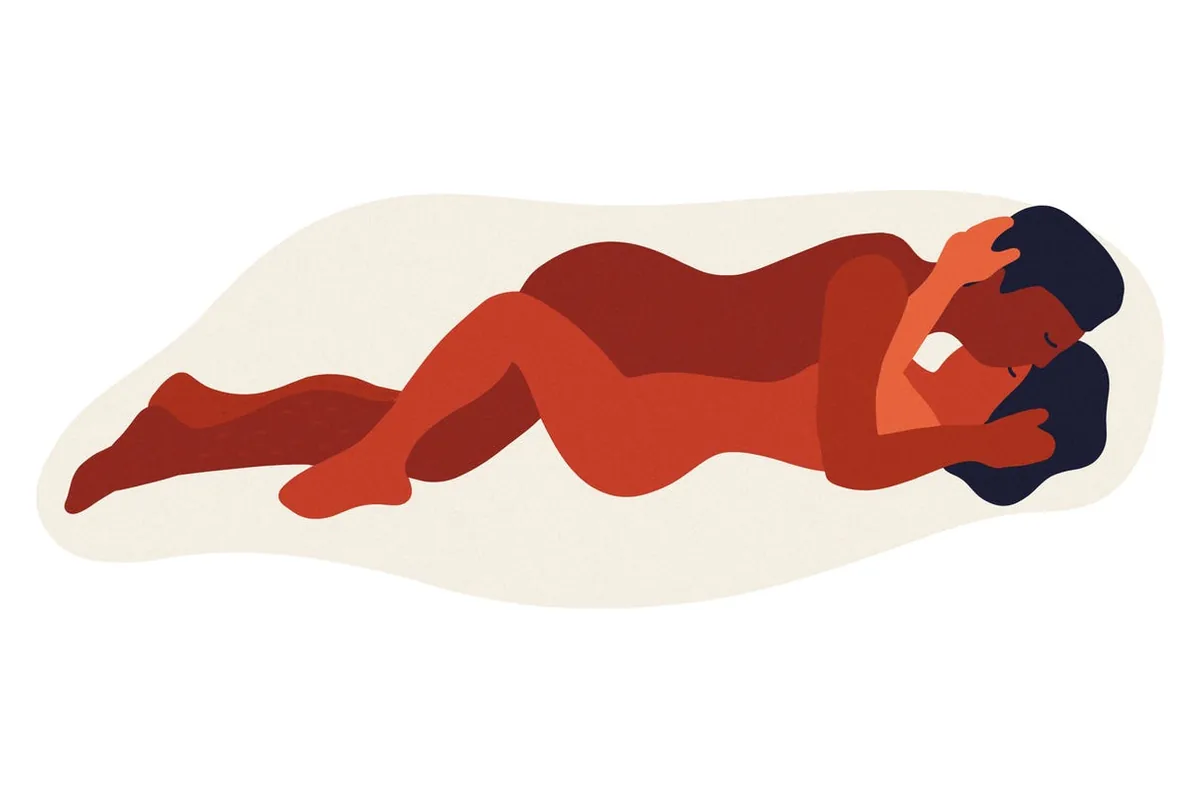
The goal is outside contact, not depth. Sex therapist Ian Kerner told Men’s Health that this is not a position for deep penetration. Healthline suggests a slow pace and a pillow under the lower partner’s tailbone to find the angle. Kerner adds that the lower partner often wraps their legs around the top partner’s waist, which helps both move in sync.
The 1988 study and the trials after it
Psychotherapist Edward Eichel developed the technique in the 1980s. He published the original study in 1988 with De Simone Eichel and Kule. Urologist Rena Malik told Men’s Health what that study found. Women using the method were more likely to reach orgasm, and more often at the same time as their partner.
Later work tested it against other methods. Healthline points to an 8-week study from 1995 that compared the CAT with directed masturbation. Women who practised the CAT reported more orgasms in missionary. A 2020 paper in Sexual Medicine says several later studies confirmed the technique works, citing a 2000 review by Pierce.
Not every result was positive. Malik notes that a study by sex therapist Helen Singer Kaplan found weaker effects. She suggests the method takes practice and real buy-in from both partners.
Where the evidence is thin
The research base is small and old. The core trials date from 1988 and 1995, and much of what is said about them comes through later summaries. Even the big Czech survey only mentions the CAT in passing and did not measure it.
There are practical limits as well. Men’s Health lists two main drawbacks: the alignment is hard to get right, and the top partner gives up depth. Some people find climax harder that way, although the slower pace may help a partner who tends to finish quickly. Malik also warns against making orgasm the goal on the first try, since that can create performance pressure.
The fair summary is that the CAT is worth trying, as an experiment rather than a proven fix. For the wider picture on reaching orgasm with a partner, see our guide on how to have an orgasm.
Comfort fixes for backs, arms and deep pain
If your back or hips hurt
Back pain changes which version is easiest, and the type of pain decides it. It matters to a lot of couples: up to 84 percent of men and 73 percent of women with low back pain report having sex much less often. A University of Waterloo team used motion capture to track the spines of 10 couples in five common positions.
For women, their advice splits by trigger. If arching the back makes the pain worse, the researchers suggested missionary in place of spooning, with a pillow under the low back to keep the spine neutral. If bending forward is the trigger, the advice flips. Those women were pointed toward spooning, or rear entry with the upper body resting on the hands. Men whose pain flares with bending were told to move from the hips rather than the spine.
WebMD offers a simpler rule: the partner with back pain may do best lying on their back, with the legs held at a 90-degree angle to relax the back muscles. That tip fits pain from arching better than pain from bending. If bending hurts, skip the legs-up and legs-on-shoulders versions, since both curl the lower spine. If a wide stance strains the hips, wrapping the legs around the top partner’s waist eases the stretch.
Taking weight off the top partner’s arms
The top partner often does the hardest work. Holding a plank above someone takes a lot of core and shoulder strength, and Laurie Mintz told Men’s Health that the workout can crowd out the pleasure. The simplest fix is to come down onto the forearms, or lie lower and let some weight rest on the partner below.
Furniture helps too. A wedge under the lower partner’s hips means the top partner does not need to press on a belly. For a much heavier top partner, the bed-edge butterfly removes arm loading altogether. Anyone who wants to skip the effort entirely can browse low-effort lying-down positions.
Pain with deep penetration
Pain that shows up only with depth has a name. Cleveland Clinic calls it collision dyspareunia and says it may feel worse in certain positions, which is why a small change of angle can matter so much. Causes include endometriosis, pelvic floor problems, pelvic congestion, and bladder or bowel conditions. Mintz adds that many women with endometriosis find deep variations painful.
The table points to gentler choices. Closed legs, a thinner pillow and feet on the chest all reduce depth or hand control to the lower partner. A slower pace helps as well. Lubricant eases dryness and friction rather than depth, so treat it as a separate fix.
When pain needs a doctor
Painful sex is common, and it is still not something to push through. Cleveland Clinic estimates that up to 28 percent of all people in the US will have painful sex at least once, and says it is more common in women.
See a provider if pain keeps coming back, and book a visit for any bleeding with sex. Treatment depends on the cause and can include pelvic floor physical therapy, medication or lubricant. Changing position can ease symptoms while you wait, but it does not replace finding the cause.
Why “boring” undersells missionary style
Where the dull reputation came from
Missionary’s tame image took hold as the term itself spread. Mental Floss traces it to the sexual revolution, when a 1970 Guardian piece called it “the tatty old missionary position”. A 1973 Montreal Star article mocked it too. The Encyclopedia of Sex and Gender argues the position got a bad rap in the 1960s and never fully recovered.
The same encyclopedia entry makes the case for it. Partners stay face to face, hands and mouths are free, and the legs and hips can be arranged in many ways, with or without pillows. That is a lot of range for something called vanilla.
Eye contact, closeness and what satisfaction research says
Closeness is what missionary style sex offers that most positions cannot. The authors of the Czech survey note that face-to-face positions let partners talk, read each other’s expressions, kiss and hug. They add that this can intensify pleasure. WebMD likewise credits eye contact and skin-to-skin contact for the position’s staying power.

Partners seem to notice. Men’s Health reports a 2024 survey in which both men and women rated missionary the best position for connecting with a partner. Sex therapist Ian Kerner puts its appeal down to connection, closeness and eye contact.
So where does variety fit? A study by Frederick and colleagues surveyed over 38,000 American adults in long-term relationships. Trying new things, such as a new position, was linked with higher satisfaction, and so was talking openly about sex. The link ran both ways, though: satisfied couples were also more likely to experiment.
Read together, the research does not cast missionary as the problem or the cure. Connection and communication appear to carry as much weight as novelty. A couple who mostly use missionary, adjust it, and talk about what feels good are following the pattern the data rewards.
Frequently asked questions
What counts as a missionary position?
Any position where partners face each other, with one lying back and the other on top, counts. The lower partner’s legs can be flat, raised or wrapped around the other person. The term once meant a man on top of a woman, but health sources now use it for couples of any gender, with or without penetration.
Why do guys like missionary positions?
Reasons vary, but closeness comes up most. Men’s Health reports a 2024 survey in which both men and women rated missionary the best position for connecting with a partner. The same article reports that men ranked it the top position for lasting longer, without naming the survey behind that ranking. Treat that as a poll result rather than a rule.
What position hurts less for the first time?
No position is painless for everyone, and comfort depends more on pace, arousal and control than on the pose itself. A slow start with plenty of lubricant makes it easy to pause. Feet on the partner’s chest lets the lower partner control depth. Stop if it hurts, and see a provider if pain keeps returning.
How to spice up a missionary position?
Small changes go a long way. Slide a pillow under the hips, raise the legs, or keep both partners’ legs together for more friction and less depth. Moving to the edge of the bed changes the angle and the effort. The coital alignment technique swaps thrusting for a slow rocking rhythm.
Does the missionary position help you get pregnant?
No. WebMD says there is no scientific evidence that any sex position raises the chance of pregnancy. Sperm reach the fallopian tubes within minutes whatever position a couple uses.
Making the missionary position work for you both
The missionary position earns its place as the default. It is easy to get into and low effort for the partner underneath, though the partner on top does real work holding their own weight. It keeps partners face to face, and changes a great deal with a pillow, a shift of the legs or a move to the bed edge. Those same changes can make it workable for a sore back or a tired top partner.
Its name owes more to a misread 1929 source than to any missionary. Its “boring” label says more about the 1960s and 1970s than about what couples report today. If the coital alignment technique appeals, try it as an experiment without a fixed goal. Talk about what feels good, and switch to the cowgirl position when the top partner needs a rest. Pain that keeps returning belongs with a doctor, not a new pose.
Related reading
- Cowgirl Position: Woman on Top, Straddling and Squatting Variants
- Edge of Bed Sex Positions: Height Setup, Butterfly, T-Bone and More
- Spooning Sex: Setup, Back Pain Research and Pregnancy
Sources
- Kamasutra in Practice: The Use of Sexual Positions in the Czech Population and Their Association With Female Coital Orgasm Potential - Sexual Medicine (Krejcova, Kuba, Flegr et al.)
- Missionary Position: What It Is and How to Try It - WebMD
- Missionary Position (Encyclopedia of Sex and Gender: Culture Society History) - Encyclopedia of Sex and Gender (via Encyclopedia.com)
- 17 Missionary Sex Position Variations: How to, Benefits, Pro Tips - Men’s Health (Annita Katee)
- Missionary sex position — how it got its name - DW (Deutsche Welle)
- The Research Error That Gave Us the Phrase ‘Missionary Position’ - Mental Floss
- Missionary Sex Position: Variations, Benefits, Tips From Experts - Women’s Health (Lydia Wang)
- 10 Things to Know About the Coital Alignment Technique - Healthline (Jen Anderson; reviewed by Janet Brito, PhD)
- How to Do The Coital Alignment Technique (CAT) Sex Position - Men’s Health (Zachary Zane)
- The Sexual Position ‘Scientifically Proven’ to Improve Pleasure - Men’s Health (Philip Ellis)
- Back pain killing your sex life? - News24
- Sex positions that women with ‘bad backs’ must avoid revealed - Business Standard (ANI)
- Dyspareunia (Painful Intercourse): Causes & Treatment - Cleveland Clinic
- Eye on Research: What Keeps Passion Alive? Sexual Satisfaction Is Associated With Sexual Communication, Mood Setting, Sexual Variety, Oral Sex, Orgasm, and Sex Frequency in a National U.S. Study - Couples and Sexual Health Research Laboratory (Natalie Rosen)