Reverse Cowgirl: What It Is, Angles, Comfort and Penile Safety
What is reverse cowgirl? How the reverse cowgirl position works, cowgirl vs reverse cowgirl, variations like reverse cowboy, comfort tips and fracture risk.
General education, not medical advice. If something here worries you, talk with a clinician.
Table of Contents
Reverse cowgirl is a partner-on-top position. One partner lies on their back, and the other sits astride them facing their feet instead of their face. The person on top sets most of the pace and does most of the moving. That tends to suit someone who likes control and feels at ease without steady eye contact.
There is one catch that many position guides gloss over. When the top partner moves freely and faces away, a slip can bend an erect penis hard enough to tear it. Doctors call this a penile fracture, and it is a surgical emergency.
Below you will find how the bodies are placed, how it compares with regular cowgirl, the easier and harder variations, and what hospital studies actually say about the injury risk.
What is reverse cowgirl? Placement and who it suits
So what is reverse cowgirl, exactly? Position names like this one are slang, and no medical body defines them. Still, the health and sex-education publishers that describe it agree on the core picture.
How the bodies are placed
The lying partner rests flat on their back on the bed. The top partner straddles their hips but turns around, so they face the lying partner’s feet rather than their head. Women’s Health describes the same setup, with the lying partner staying reclined while the person on top controls movement, pace and depth.
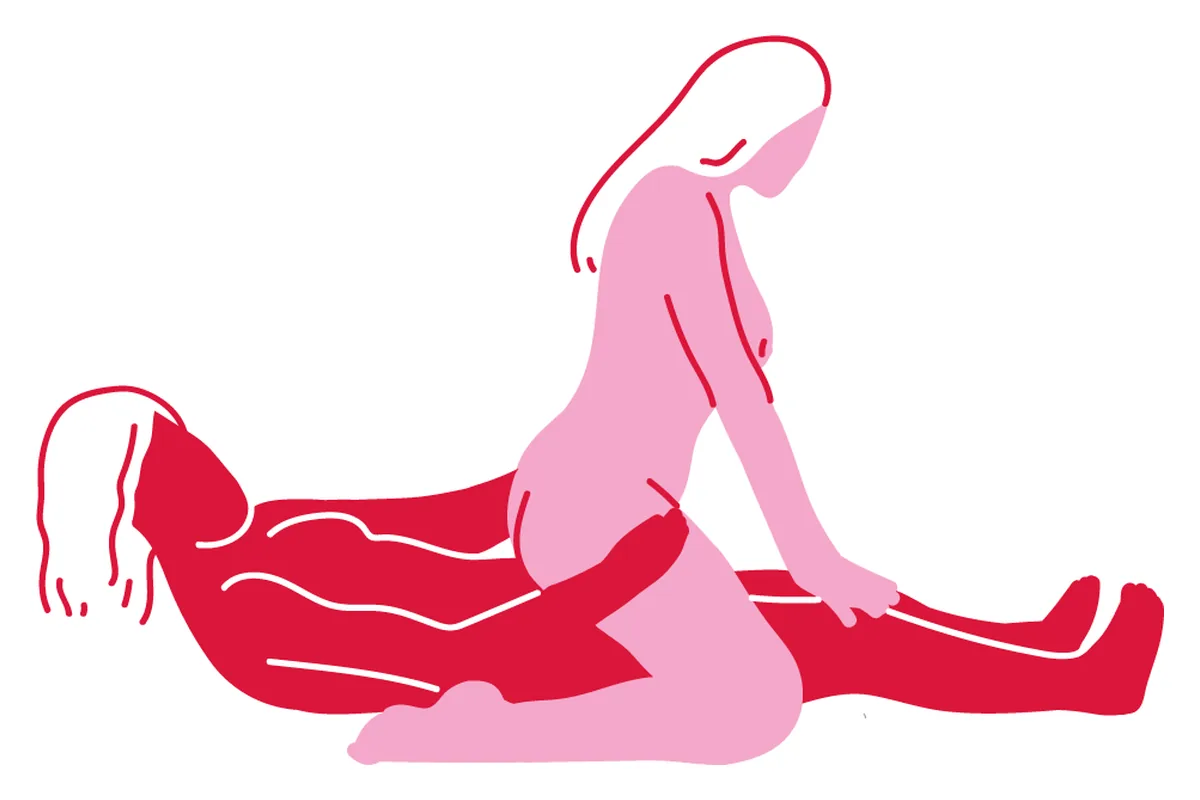
The details are where sources part ways. Kinkly has the top partner squatting over the lying partner. Sex With Emily describes kneeling instead, with the shins flat on the mattress. WebMD allows either, and so does the sex expert quoted by Grazia. Sex educator Gigi Engle pictures the lying partner with legs stretched straight out.
You will also see it called the reverse rider. WebMD adds that a version appears in the Kama Sutra under the name The Tigress.
Who it tends to suit
The reverse cowgirl sex position hands the top partner the controls. Kinkly notes that, as in any receiver-on-top position, the person on top decides how deep and how long. That makes it a good fit when one partner wants to lead and the other is happy to rest.
Facing away cuts both ways. A Drexel University sexuality professor told Women’s Health that it can make sex feel more or less comfortable, depending on the couple. Sex With Emily suggests it for people who find long eye contact a little exposing. Others simply miss seeing their partner’s face, and for them the face-to-face version usually feels warmer.
It is also harder work than it looks, and not everyone enjoys it. Engle finds it more tiring than regular cowgirl, with less room to pause, and says sitting upright feels like holding a squat. She also notes that the entry angle does not suit every body, and some people find it uncomfortable. WebMD warns that long holds strain the knees, legs and arms. If either partner has sore knees or a weak back, start with the chair or bed-edge versions further down.
Cowgirl vs reverse cowgirl: a side-by-side comparison
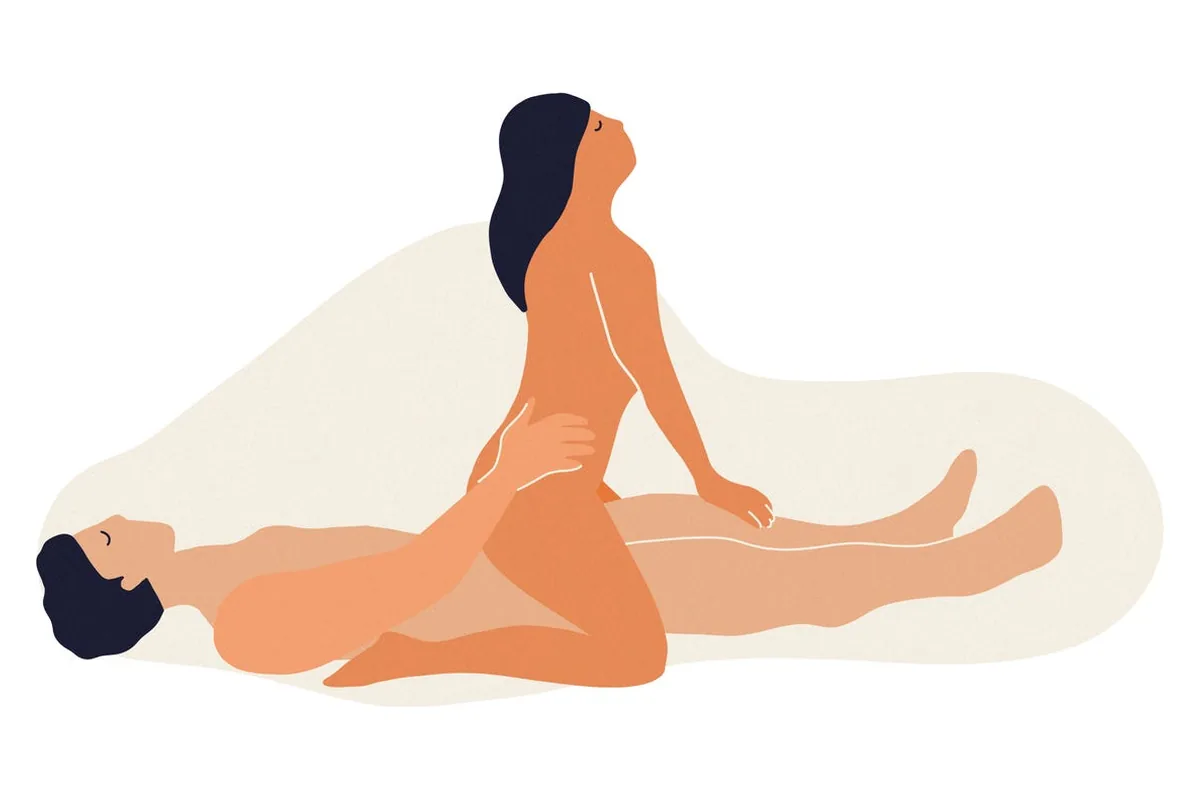
The two positions share a base: one partner lies down and the other straddles them. The only real difference is which way the top partner faces, but that one change shifts eye contact, balance and the angle. Our guide to the cowgirl position covers the face-to-face version in full.
| Cowgirl | Reverse cowgirl | |
|---|---|---|
| Facing direction | Toward the lying partner’s head | Toward the lying partner’s feet |
| Eye contact | Direct, so each partner can read the other’s face | Little or none, which some people find freeing |
| Who controls pace | Mostly the top partner | Mostly the top partner; the lying partner can bend their knees and join in |
| Effort for the top partner | Kneeling strains the knees; a firm wedge under the thighs helps | Often more tiring, with less room to pause |
| Angle | Changed by leaning forward or back | Changed by leaning forward or back; a full lean back should be eased into |
| Injury risk | Grouped as woman-on-top in fracture studies | Grouped in the same woman-on-top category |
The eye-contact row is the one couples notice first. Woman & Home points out that in face-to-face cowgirl, partners can see when to slow down or check in without a word. In cowgirl vs reverse cowgirl, that silent signal is the main thing you give up. Talking out loud has to cover the gap.
The risk row needs a caveat. The hospital study of 252 patients in Turkey sorted injuries into man-on-top, woman-on-top and doggy style, with no separate reverse group. So no reliable figure exists for the reverse version on its own, whatever social media claims. The fracture section below goes through what the numbers do show.
Easier and harder ways to vary the setup
Small changes in posture or furniture make the basic position easier, harder or simply different. Each version below keeps the same idea: the top partner faces away from the person underneath.
Leaning forward
The top partner tips their chest toward the lying partner’s feet and takes some weight on their hands. Men’s Health describes a lower version where they rest on their elbows, and calls it a relatively low-effort option. Some people also find leaning forward more comfortable than sitting bolt upright, especially if an upright angle feels too deep.
Leaning back
Here the top partner leans back, either propped on their hands or lying fully against the other partner’s chest. Grazia’s expert suggests this as a way to rest when the legs tire. It is also the variation experts flag most. An expert quoted by Men’s Health warns that dropping straight into a full lean can bend the penis at an awkward angle. Start upright, and only lean back slowly once both of you are settled.
The lean can also strain the top partner’s lower back and core. If it does, the lying partner can support their chest with their hands, or the top partner can come forward again.
On a chair
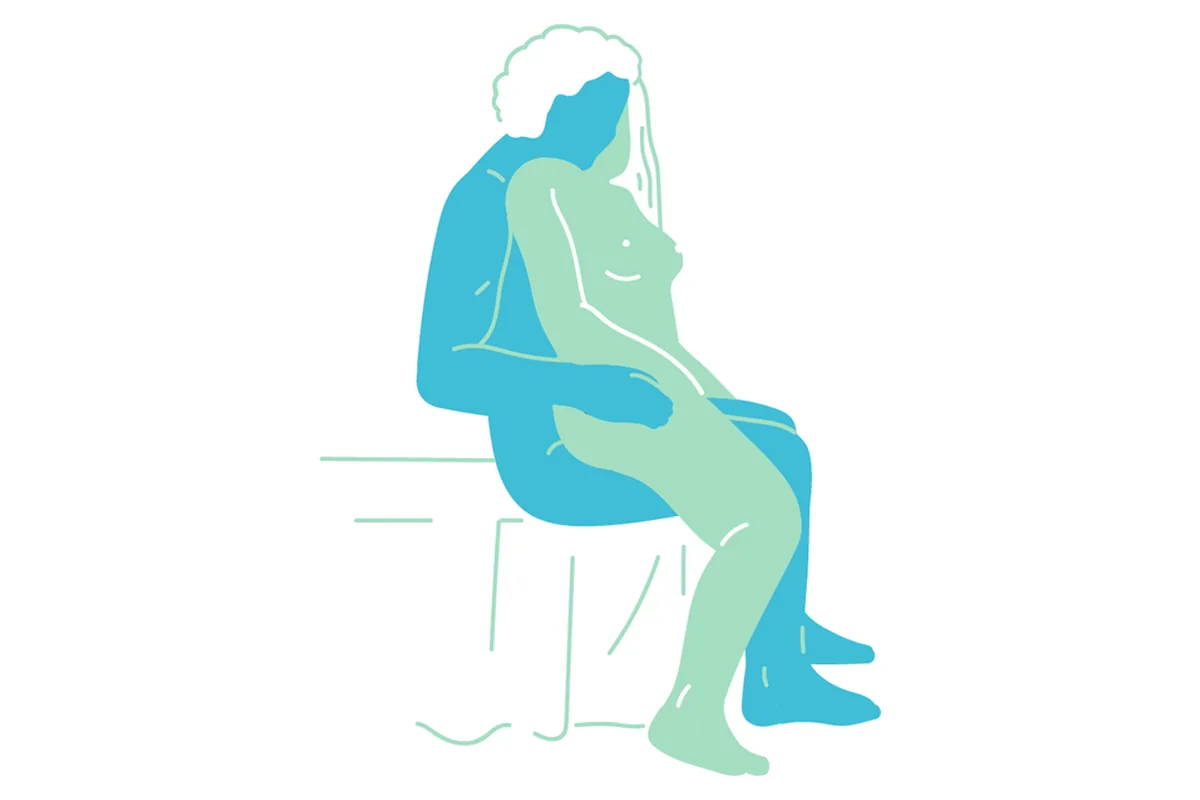
One partner sits on a sturdy chair, and the other sits on their lap facing away. Men’s Health calls this the Hot Seat and recommends an armless chair that will not tip. The seated partner can press their feet into the floor, which spreads the work more evenly. For anyone with sore or stiff knees, this seated version is often the most comfortable way to start.
At the edge of the bed
The same idea works with one partner sitting on the edge of the bed. The top partner sits between their legs, facing away, with both feet on the floor. Because the feet carry weight, the knees are spared, and a bed of the right height lets the top partner push up with their legs. Our guide to edge-of-bed sex positions covers furniture height and setup.
People sometimes call these upright versions a standing reverse cowgirl. The name is used loosely for several different setups, so check what a partner means before assuming.
Reverse cowboy and other names
What is reverse cowboy? It is casual slang, and none of the health publishers reviewed for this guide define it. In everyday use, the reverse cowboy position seems to mean the same placement with a male top partner, or a name that avoids gender. “Backwards cowgirl” and “reverse cowgirl style” are best read the same way.
The position itself is not tied to any pairing. WebMD says any couple can try it, including two partners with penises. Women’s Health says it can be adapted by couples of all genders and orientations, and Kinkly notes that same-sex couples use it too. The placement and the safety advice are the same for everyone.
Penile fracture: what the research says about partner-on-top positions
Penile fracture is rare, but partner-on-top positions turn up often in the case reports. Here is what it is, what the studies found, and what to do if it happens.
A tear in the sheath, not a broken bone
The penis has no bone. A “fracture” is a tear in the tunica albuginea, the tough sheath around the two erectile chambers. It happens when an erect penis takes a sudden blow or is bent with force. StatPearls, a clinical reference used by doctors, puts the yearly rate in the United States at about 1 case per 175,000 men.
In this position, the usual story is a slip. If the penis slips out and the top partner comes back down at a bad angle, it can strike the pubic bone or take their full body weight. WebMD says this tends to happen when the two partners fall out of sync.
What case-series studies found
Most of what is known comes from hospital case series, where doctors ask injured men what they were doing at the time. These studies do not agree on which position is riskiest.
- A study of 44 men: 28 were hurt during heterosexual sex, and 14 of those 28 (50%) named partner on top. Doggy style came next, with 8 men (28.6%).
- A study of 90 men: doggy style led, with 37 men (41%). Men’s Health reports that missionary and woman-on-top followed, and that injuries were more severe in doggy style than in woman-on-top.
- A Turkish series of 252 patients: doggy style (41%) and man-on-top (25.5%) were the most common. Severe injuries, meaning both erectile chambers torn, were significantly more common in those two positions than in woman-on-top.
None of these studies can rank positions by risk. They count which position injured men were in, but nobody knows how often couples use each position in the first place. If one position is simply used more, it will show up more in hospital records even if it is no riskier. StatPearls sums up the picture. Female-superior and rear-entry positions are the ones most often linked, yet one study noted that meta-analyses found no single position with a higher risk.
So where does the “world’s most dangerous position” headline come from? The Guardian traces it to viral reports, including a TikTok claim by a doctor that the position caused up to 50% of these injuries. The Guardian also points to a 2017 journal study that put doggy style first at 41% and missionary second at 26%. Men’s Health adds that earlier Brazilian research ranked woman-on-top as riskiest, because the top partner controls angle and speed. Both look like the same two studies listed above, so these reports add headlines rather than new evidence.
The fair reading is modest. Partner-on-top positions are a common setting for this injury, but the evidence does not single out reverse cowgirl as uniquely dangerous. Doggy style led in two of the three studies above, so the same care applies to doggy style and other vigorous positions.
Warning signs
The signs usually arrive at once:

- a cracking, popping or snapping sound
- sudden pain and a fast loss of erection
- rapid swelling and dark bruising, sometimes with a visible bend
- blood at the tip, blood in the urine, or trouble peeing
That last group matters. It can mean the urethra, the tube that carries urine, is hurt too, which StatPearls says happens in about 20% of cases.
Why it is an emergency
StatPearls calls penile fracture a true urological surgical emergency, and the usual treatment is prompt surgical repair. Timing affects the result. One study found that a delay of about 8 hours brought a big rise in erection problems after surgery.
Waiting it out at home tends to go worse. Cases managed without surgery have significantly more complications, mainly erectile dysfunction. Scar tissue can also cause curvature, painful erections and some loss of length.
If the warning signs appear, stop and go straight to an emergency department. It can feel embarrassing, but the Sexual Medicine Society of North America advises getting care right away, because delay can make things worse. With prompt repair, StatPearls rates the outlook as excellent.
How to do reverse cowgirl comfortably
How to do reverse cowgirl comfortably comes down to three things: support for the joints, slow movement, and enough lube. None of it needs special kit beyond a few pillows.
Support the knees and thighs
The top partner’s knees take most of the load in the kneeling version. WebMD suggests tucking pillows under those knees, and another under the lying partner’s back. Sex With Emily prefers a firm foam wedge under the thighs, since it gives less than a soft pillow. If the knees still ache after a few minutes, move to the chair or bed-edge version so the feet carry some weight.

Something sturdy to hold helps with balance. Women’s Health suggests the lying partner put their head at the foot of the bed, so the top partner can grip the headboard or bedpost. The lying partner can also bend their knees, giving the top partner something to hold. Swapping between variations every so often gives tired thighs a break.
Slow pace and spoken check-ins
Speed is where most problems start, especially early on. WebMD advises small, slow motions at first, or grinding instead of big up-and-down movements. Woman & Home also tells beginners to go slowly, since overly vigorous movement has been linked to penile fracture. Rocking back and forth is gentler on the thighs, too.
Since you cannot see each other’s faces, the cues you would normally read have to be said out loud instead. Women’s Health suggests quick check-ins such as asking how something feels. The lying partner should speak up at once about any sharp pain or a bad angle. Before you start, agree on one plain word for “slow down” and another for “stop”, which takes the guesswork out of it for both of you.
Depth is the other thing to manage. If it feels too deep, Sex With Emily suggests tucking the pelvis under slightly, and Engle suggests pillows under the knees to raise the top partner a little. Leaning forward helps some people as well.
Use enough lube
Lube cuts friction, which makes movement smoother and more comfortable. Women’s Health recommends using it from the start rather than adding it later.
Match the lube to the condoms and toys you use. Water-based lube is safe with condoms and with all toys. Silicone-based lube lasts longer and works with latex condoms, but it can damage silicone toys. Skip oil-based lube with latex condoms, because it can break them down.
Frequently asked questions
What are the benefits of the cowgirl position?
Both cowgirl and its reverse version put the top partner in charge of pace, depth and angle. The lying partner can rest or join in by bending their knees. Face-to-face cowgirl adds eye contact, which makes it easier to read each other without words. The reverse version faces away, so there is no eye contact, which suits people who find long eye contact feels too exposed.
How to be on top without your legs hurting?
Take weight off the knees first. Put pillows or a firm wedge under the knees or thighs. Lean forward onto your hands, rock rather than bounce, and hold on to something sturdy like the headboard. If your legs still burn, the chair or bed-edge version lets your feet carry the load.
What does the slang term reverse cowgirl mean?
It names a sex position in which one partner lies on their back and the other sits astride them, facing their feet. “Cowgirl” is the face-to-face version, and “reverse” means turned around. Publishers also call it the reverse rider. It is slang, so details such as kneeling or squatting vary from source to source.
Do penile fractures heal on their own?
You should not count on it. StatPearls reports that cases managed without surgery have significantly more complications, mainly erection problems, and scarring can cause curvature or painful erections. A doctor needs to examine any suspected fracture quickly. Whether surgery is needed is a specialist’s call, so get seen rather than waiting it out.
How do I tell if I got a penile fracture?
The classic signs are a crack or pop, sudden pain and a fast loss of erection, followed by swelling and bruising. Blood at the tip or trouble peeing can mean the urethra is hurt too. If any of these happen, stop and go to an emergency department.
Is reverse cowgirl right for you?
Reverse cowgirl suits couples where one partner likes to set the pace and both are fine without constant eye contact. It asks a fair amount of the top partner’s knees and thighs, so start with pillows, or try the chair or edge-of-bed version if joints complain.
Treat the safety side with respect without letting it scare you off. The research does not crown this position the most dangerous, but partner-on-top positions are a common setting for penile fracture. Move slowly, ease into any backward lean, use lube, and talk. If you hear a pop and the erection goes with pain and swelling, head to an emergency department.
For more on-top options, the amazon sex position flips the usual roles, and the missionary position is the easy face-to-face fallback. Readers who want less effort may prefer low-effort lying-down positions.
Related reading
- Cowgirl Position: Woman on Top, Straddling and Squatting Variants
- Amazon Sex Position: Setup, Comparisons, Risks and Easier Options
- Edge of Bed Sex Positions: Height Setup, Butterfly, T-Bone and More
Sources
- Reverse Cowgirl: What It Is and How to Do It - WebMD
- Penile Fracture - StatPearls (NCBI Bookshelf)
- Reverse Cowgirl Sex Position: How To, Benefits, Tips From Experts - Women’s Health
- The Reverse Cowgirl Position - Kinkly
- How to Master Cowgirl and Reverse Cowgirl - Sex With Emily
- Make Reverse Cowgirl Even Sexier With Expert Tips - Grazia
- What is The Reverse Cowgirl Sex Position? - Gigi Engle
- Cowgirl sex position: What it is, variations, and benefits - Woman & Home
- 17 Best Sex Positions for When Your Partner’s on Top - Men’s Health
- What is the Most Dangerous Sexual Position that Causes Penile Urethra Fracture? - International Journal of Sexual Science
- What Are the Risk Factors for Penile Fracture? - Sexual Medicine Society of North America
- How Having Doggy Style Sex Can Actually Fracture Your Penis - Men’s Health
- Reverse cowgirl: the world’s most dangerous sexual position - The Guardian
- Lubricant guide - choose the right lube - RFSU