Waterfall Sex Position: Two Versions, Head-Down Risks and Gentler Options
What is the waterfall sex position? Two setups share the name, plus the reverse waterfall and niagara falls. What the head-down part does, and gentler options.

General education, not medical advice. If something here worries you, talk with a clinician.
Table of Contents
The waterfall sex position is an edge-of-the-bed move in which one partner lies on their back with the head and upper body hanging off the mattress. In the version most position guides describe, the other partner straddles them on top.
Not every guide agrees on that, though. Some use the same name for a setup where the receiving partner arches back off the edge while the other stands or kneels in front. Before trying it, settle which waterfall you both mean, because the two place very different demands on each body.
This guide compares the two versions and separates the head-rush claims from what researchers have actually measured. No study has tested how to make the head-down part safe during sex, so the precautions below lower the strain rather than remove it. Gentler setups that keep the head on the bed follow near the end, and for many people they are the better choice.
What is the waterfall sex position?
The setup most guides describe
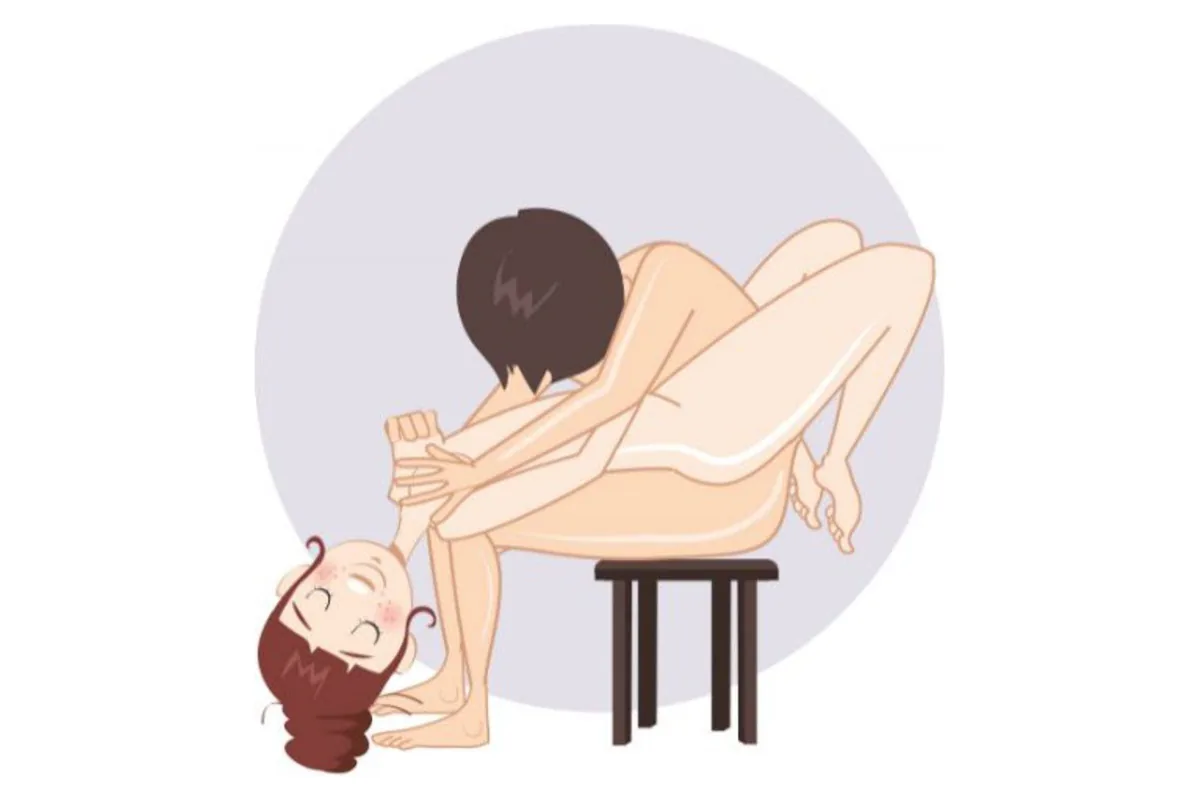
The established version puts the penetrating partner on their back. Kinkly’s position entry places them face up with the head and torso off the edge of the bed, and the shoulders may rest on the floor. The receiving partner straddles them facing forward, legs in front, and sets the depth and pace. MarriedFun’s couples library files the same arrangement under both woman-on-top and edge-of-the-bed positions.
So the person on top does most of the moving, and the person underneath does most of the hanging, usually with some help from their arms. MarriedFun notes that the lying partner often supports the upper body with them.
The bed itself is the main variable. Kinkly points out that bed height decides how intense the position feels for the partner underneath. A tall bed with a thick mattress gives a steep drop toward the floor. A low platform bed or a sofa gives a shallow one, which is where most people should start.
Why the name has no fixed meaning
Sex position names are informal slang with no official definition, and publishers borrow names from each other and reshape them as they go. The waterfall illustrates this especially clearly.
Sex therapist Katie Mitchell describes a different shape under the same name. In her version the partner being penetrated lies back and lets the head and upper body hang slightly off the edge. The other partner stands or kneels in front of them. A retailer’s guide from VenusFun describes much the same thing: hips near the edge, upper body lower than the hips, and the other partner more upright.
Both descriptions are reasonable, and each has its own following, but they are two different positions sharing one label. When a partner suggests the waterfall position in sex, ask which one they have in mind. A quick description of who lies where prevents an awkward misunderstanding later.
Waterfall vs reverse waterfall: the two versions side by side
How the two compare
The two versions share a bed edge and a head-down partner, but almost everything else differs, starting with who does the hanging.
| Receiver-on-top waterfall | Arched waterfall | |
|---|---|---|
| Who lies at the edge, head and shoulders off the bed | The penetrating partner, face up | The receiving partner, on their back |
| Who is on top | The receiving partner, straddling and setting the pace | No one; the other partner stands or kneels at the edge |
| Who carries weight | The lying partner’s arms hold the upper body, and the shoulders may rest on the floor | The bed holds the hips; the standing partner stays on their own feet |
| Main strain | Neck and head pressure for the partner underneath | Lower back and neck for the arched partner |
| How hard it is | Moderate; needs some balance and core strength | Not rated by the guides; VenusFun says to skip it with chronic lower back pain |
Read the table by role. In the first version, the person who hangs is not the one who moves, so they can concentrate on staying comfortable and supported. In the second, the arched partner is mostly still while the standing partner sets the rhythm from the floor.
The arched version, where the receiving partner hangs back
Here the person being penetrated takes the head-down role instead. They lie on their back with the hips at the edge and let the head and shoulders drop slightly past it, making a gentle curve. The other partner stands on the floor or kneels, depending on how high the bed is. Because the hips sit higher than the shoulders, the pelvis tilts and the angle changes compared with lying flat.
The cost of that curve lands on the lower back. VenusFun advises people with chronic lower back pain to skip the position, and suggests firm support under the mid-back so the spine is not holding the arch alone.
Mitchell calls this arched setup simply the waterfall, and none of the guides checked here uses the name reverse waterfall position for it. Where the reverse label does appear, it means something else, and the guides do not agree with each other. VenusFun’s reverse waterfall keeps the raised hips and only changes the partners’ orientation or support. WildNightX uses a reverse-style variant in which the partner on top turns to face the hanging partner’s feet, as in reverse cowgirl.
How “niagara falls” is used
The niagara falls sex position sounds as if it should mean the same thing. The guides checked for this article do not treat it that way. One position-guide app uses Niagara Falls for a standing oral-sex move, where one partner bends the upper body backward while the other supports their back.
That move involves no bed edge and no lying partner, so it shares only the backward lean with either waterfall. If someone uses the name, ask them what they picture before you plan around it.
Why people try it, and what the head-rush claims rest on
What position guides claim
Most guides sell the waterfall on one feeling: the head rush. Kinkly says the blood rush to the lying partner’s head enhances sensation. MarriedFun says blood flowing to the brain intensifies the experience. Katie Mitchell goes furthest, writing that the slight inversion can improve blood flow to the head, raise arousal and lead to more powerful orgasms.
None of these pages cites a study, and no study of the waterfall itself turned up in the research for this article. The claims may match what some people feel, but they remain unproven assertions. Other reasons guides give are easier to accept on their own terms, such as novelty, the view, and one partner getting to set the pace.
What inversion does to the body
Researchers have measured something narrower. They have studied what happens to the body when the head drops below the heart for a few minutes. In a Pacific University thesis, 11 healthy young men were tipped upside down on an inversion chair. After 2.5 minutes, their average eye pressure had roughly doubled, from 12.5 to 25.1 mmHg. Their blood pressure climbed from about 117/79 to 140/107 mmHg over the same stretch. Both settled back to near normal once the men sat up again.
Milder head-down poses also raise eye pressure, though the study report gives no figures to set beside the chair results. Researchers at New York Eye and Ear Infirmary of Mount Sinai had people hold four head-down yoga poses for two minutes, including legs up the wall. Eye pressure rose in every pose, in healthy people and in glaucoma patients alike.
So dropping the head below the heart really does push up eye pressure and blood pressure. The studies measured those numbers, not what people felt, so they cannot say whether the head rush guides describe is that pressure change. Nobody has shown that this pressure makes orgasm stronger. A bed-edge hang is also gentler than hanging completely upside down. These studies show which way the pressure moves, but they cannot tell you exactly how much it changes for you.
Lowering the strain: neck support, time and who should skip it
Support the neck and shorten the hang
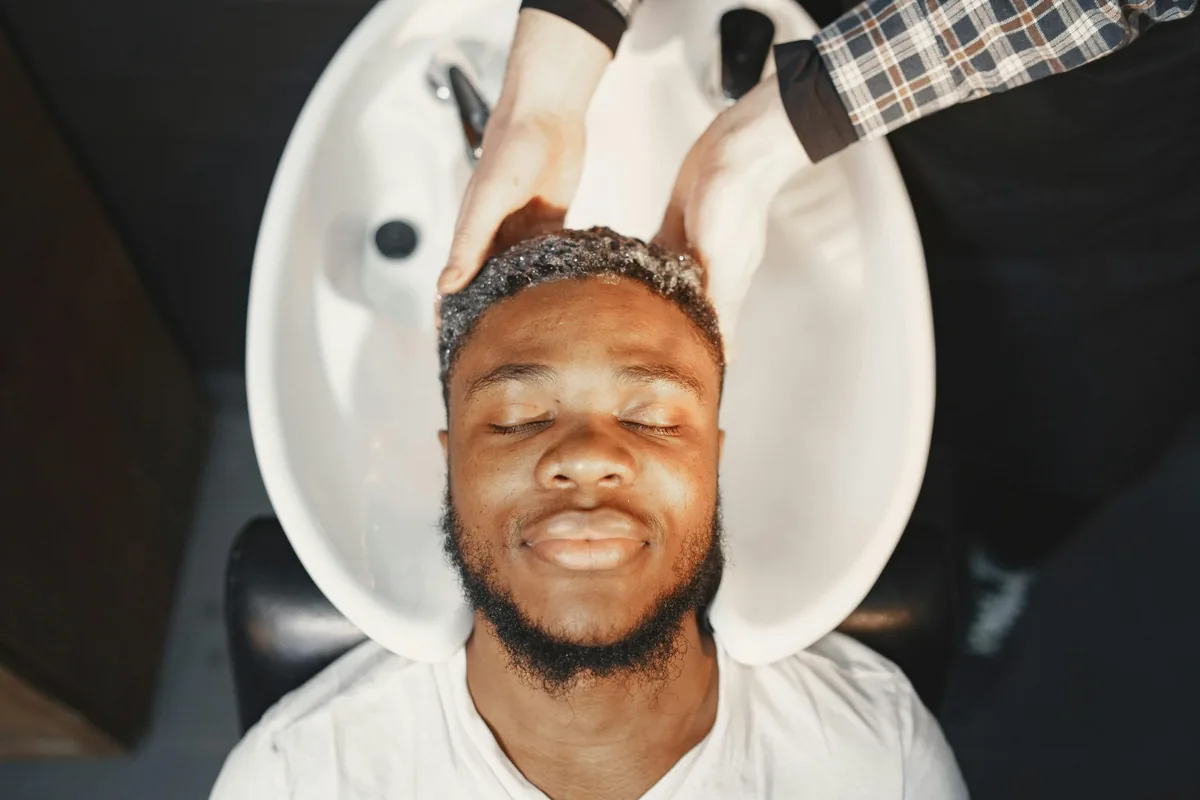
The neck is usually the first part of the body to complain. Letting the head drop back with nothing under it bends the neck backward, and a long, unsupported backward bend has a known downside. Keeping the head bent back over a salon sink for a long time can, in rare cases, tear an artery in the neck and cause a stroke. Doctors call this beauty parlor stroke syndrome. A salon chair is a different setting, and nobody has measured this risk for sex positions, so it is a reason for caution rather than a known rate. Supporting the neck costs almost nothing.

Put a pillow, a folded towel or a firm cushion under the shoulders and the back of the head, so the neck stays closer to straight. Mitchell recommends pillows or cushions for neck and back support. She also suggests checking that the lying partner cannot slip off the bed. A lower surface helps as well, since a sofa or a low bed gives a shallower hang.
How long is reasonable
Nobody has tested a safe time limit for this position, so this guide does not give one. Some retailer guides suggest a couple of minutes per stretch, or using it as a brief switch mid-session, but those figures come from experience, not measurement. The inversion research does not support any number either. The chair study took its first reading at 2.5 minutes, and eye pressure and blood pressure were already high by then. The Mount Sinai study found eye pressure up in all four poses held for two minutes. No study shows that a shorter hang avoids the rise, so a short hang is not proof of a safe one.
If you do try it, the head-down partner decides when to come up, and comes up at the first sign of discomfort rather than at a set time. Afterward, sit up slowly and stay seated for a moment before standing. Blood pressure can dip briefly when you change position, and that dip is what makes people light-headed. Harvard Health’s advice for this kind of dizziness is to drink water and stand up slowly.
Who should skip it
Skip the head-down part, or ask a doctor first, if any of these apply:
- High blood pressure or glaucoma. The Pacific University author says inversion devices may be contraindicated for both, and for raised eye pressure.
- Diabetes with blood vessel changes. The same thesis flags vascular changes such as those in diabetes, after one man burst a small vessel in his eye.
- Low blood pressure, or a tendency to feel light-headed. WildNightX lists high or low blood pressure among its reasons to avoid the position.
- Neck or back problems, or vertigo. VenusFun advises against it with chronic lower back pain or vertigo, and WildNightX adds neck issues.
- Pregnancy. ACOG advises avoiding lying flat on the back as much as possible, because the uterus presses on a large vein.
Pregnancy also shifts balance and raises the risk of falling, which matters on a bed edge. Two other groups often appear on safety lists. Anyone recovering from surgery should ask their surgeon before trying a position that loads the neck, back or eyes, and migraines are frequently mentioned as well. None of the sources checked here links migraines to head-down positions, so treat that as a sensible caution rather than an established rule.
Signs to stop
Come back onto the bed if the hanging partner feels dizzy, gets a headache, notices blurred vision or feels neck pain. Sit up and wait for the feeling to settle before standing. VenusFun gives the same advice: if dizziness hits, sit up or slide back onto the flat part of the bed.
Some symptoms need more than a short rest. Sudden weakness on one side of the body or a drooping face are stroke warnings, and they call for emergency help right away.
Easier ways to get a similar feel
A shallower tilt at the bed edge
You can get some of the waterfall’s angle without the hang. Keep the head and shoulders on the mattress and bring only the hips to the edge, with a pillow under them for height. The upper body ends up slightly lower than the pelvis, which is the shape VenusFun says gives the position its angle. The difference is that the neck stays fully supported throughout.
VenusFun describes a version with firm pillows placed farther onto the bed as a gentler waterfall effect. Our guide to edge of bed sex positions covers more setups that use the mattress edge without any inversion.
A half-waterfall sits in between. Only the head tips past the edge, while the shoulders stay on the bed. Put a folded towel under the neck so the head does not drop all the way back without support.
Start from cowgirl
For the receiver-on-top version, the easiest way in is the cowgirl position. Both put the same partner on top, so the only change is where the bottom partner’s head goes. WildNightX suggests starting in cowgirl near the edge and letting the lower partner move back gradually. That approach lets the lying partner stop at whatever angle feels comfortable.
If keeping the shoulders on the mattress is as far as it goes, that still counts. People who want the on-top control with no head-down element at all can stay flat on the bed instead. A wedge or firm pillow under the lower partner’s hips changes the angle without inversion. WildNightX offers this supported version for anyone its safety list rules out.
Frequently asked questions
What is a reverse waterfall?
The answer depends on who is using the term, and the guides checked here do not agree. WildNightX uses it for a variant where the partner on top turns to face the lying partner’s feet. VenusFun’s reverse waterfall keeps the raised hips but changes the orientation or support. The safest move is to ask your partner to describe it.
What is the waterfall pose?
Yoga teachers use waterfall pose as another name for legs up the wall. You lie on your back with your legs raised and resting against a wall, and the pose has nothing to do with the sex position. It is still a mild head-down pose, though, and legs up the wall raised eye pressure in the Mount Sinai study, which matters for people with glaucoma.
Is the waterfall sex position beginner-friendly?
Not really. MarriedFun notes that it calls for strength and balance from both partners, and the head-down part raises eye pressure and blood pressure in a way nobody has tested for safe limits during sex. Beginners get most of the angle from the flatter versions near the end of this guide, with the head and shoulders kept on the bed. Anyone with the conditions in the who-should-skip-it list should stay with those.
What if I feel dizzy during the position?
Stop and come back onto the bed, then sit up slowly, and stay seated until the feeling passes before you stand. While the head hangs down, blood pressure and eye pressure go up rather than down. Dizziness at that point means the angle or the time is too much for you. Light-headedness when you sit or stand up afterwards is different: blood pressure dips briefly as you change position. Next time, try a lower bed, more support under the shoulders or shorter stretches. If the dizziness lingers, or comes with a severe headache or weakness, get medical help.
Picking the version that suits you both
The waterfall sex position is one name for two quite different setups. In the better-known one, the partner underneath hangs their head and shoulders off the bed while the other rides on top. In the other, the receiving partner arches back off the edge and the standing partner does the moving. Agree on which one you mean before anyone moves toward the edge.
Whichever you pick, the head-down part is the risky part. Hanging the head raises eye pressure and blood pressure, nobody has shown that it makes sex feel better, and nobody has tested a safe duration. Support the neck, let the hanging partner come up whenever they want, and sit up slowly. People with high or low blood pressure, glaucoma, neck or back problems, or a pregnancy should choose a flatter version. A pillow under the hips at the bed edge gets you most of the angle with none of the hang.
Related reading
Sources
- The Waterfall Position - Kinkly
- July Position of the Month: The Waterfall - Heights Family Counseling (Katie Mitchell, M.A., LPC, CST)
- Waterfall Sex Position - How-to, tips, benefits & more - MarriedFun
- Waterfall Sex Position: How to Do It Deeply & Comfortably - VenusFun
- The effects of inversion chair therapy on intraocular pressure and systemic blood pressure - Pacific University (Master of Science in Vision Science thesis)
- Waterfall Sex Position: How to Do It Deeply and Right - WildNightX
- Niagara Falls Position Guide: Techniques & Tips - Sexy Positions app
- Certain Yoga Positions May Impact Eye Pressure in Glaucoma Patients - Mount Sinai Health System via Newswise
- Beauty parlor stroke syndrome and why a shampoo funnel in your salon could save a life - Professional Beauty Association (Beth Hickey)
- Why You Get Dizzy When You Stand Up Quickly or Exercise - Cleveland Clinic
- After standing, a fall in blood pressure - Harvard Health Publishing
- Exercise During Pregnancy - American College of Obstetricians and Gynecologists
- Discover the Secret to Better Sleep: The Waterfall Pose - Purveyor15